









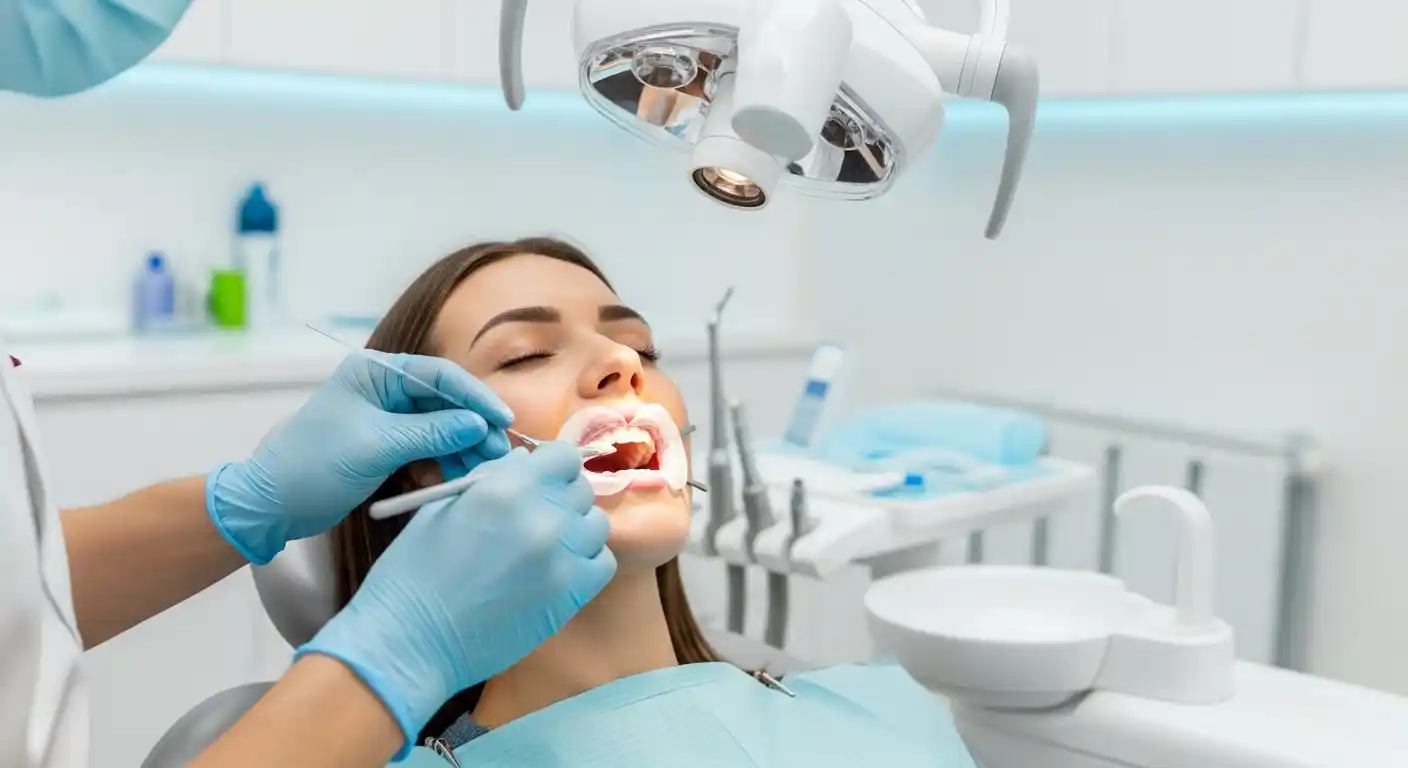


A dental bridge is a fixed restoration that replaces one or more missing teeth with artificial teeth supported by nearby natural teeth or dental implants. It helps restore chewing and speaking, fills gaps in your smile, and may prevent neighboring teeth from shifting. The four main types are traditional, cantilever, Maryland, and implant-supported bridges.
At Vista Dorada Dental in Gilbert, AZ, patients can explore tooth replacement options based on their oral health, the location of missing teeth, and the condition of surrounding teeth. The right bridge depends on the available support, bite pressure, and treatment needs.
Most traditional bridges require tooth preparation, impressions, and fitting over two or more appointments. Dental bridges commonly last 5 to 15 years, sometimes longer with proper care. Costs depend on the bridge type, materials, and insurance coverage. This guide explains the benefits, possible risks, procedure, daily cleaning, and how dental bridges compare with other tooth replacement options.
What Is a Dental Bridge?
A dental bridge is a custom-made restoration used to replace one or more missing teeth. It fills the empty space with artificial teeth supported by neighboring natural teeth or dental implants. The restoration is designed to match the shape, color, and position of surrounding teeth while helping restore normal oral function.
Unlike removable dentures, fixed bridges stay in place during eating and speaking. According to the American Dental Association, a fixed dental bridge can only be removed by a dentist.
What Are the Main Parts of a Dental Bridge?
A dental bridge has several components that work together to replace missing teeth:
- Pontics: Artificial teeth that fill the spaces left by missing natural teeth.
- Abutments: Natural teeth or dental implants that provide support for the bridge.
- Retainers: Crowns or bonded attachments that secure the restoration to its supports.
- Connectors: Parts that join the replacement teeth to the supporting structures.
Not every bridge uses the same components. Traditional bridges rely on crowns, while Maryland bridges use bonded wings and implant-supported bridges attached to dental implants.
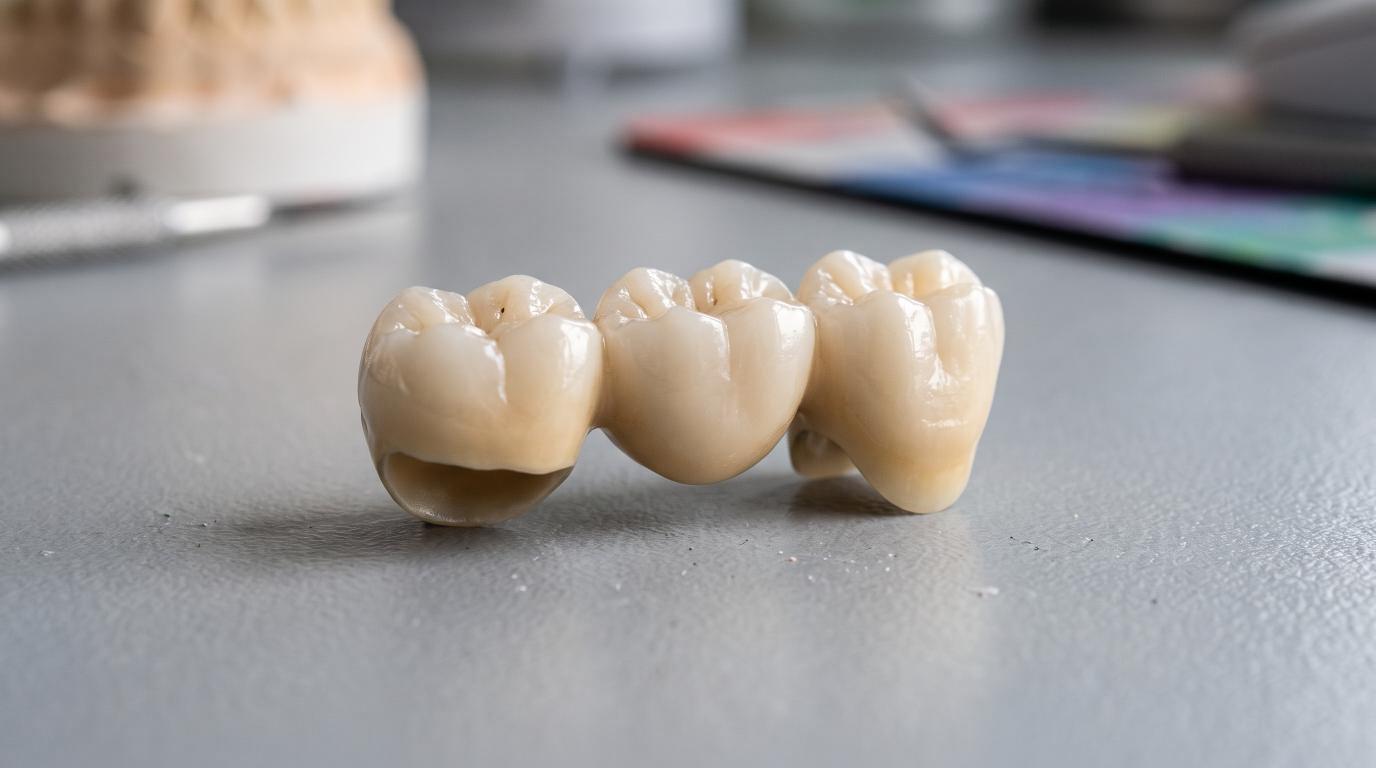
How Do Dental Bridges Work?
Dental bridges work by using nearby teeth or dental implants to support artificial replacement teeth. When you bite or chew, pressure passes through the bridge to these supporting structures. A properly fitted bridge helps restore chewing function while keeping the replacement teeth stable.
The dentist considers the strength of the supporting teeth, the location of the gap, and how your upper and lower teeth meet. These factors influence the bridge’s design and long-term stability.
How Does Your Bite Affect Dental Bridge Stability?
Your bite affects how pressure is distributed across a dental bridge. Uneven contact, teeth grinding, or clenching can increase stress on the restoration and supporting structures. Excessive pressure may contribute to wear, chipping, or loosening over time.
A 2023 study by Alois Schmid and colleagues used computer modeling to examine how uneven biting contacts affect an all-ceramic dental bridge. The researchers found increased stress near certain contact points, highlighting the importance of proper bite adjustment.
Dentists check how the replacement teeth meet the opposing teeth before completing treatment. Patients who grind their teeth may also need additional protection, such as a custom nightguard.
What Are the Four Main Types of Dental Bridges?
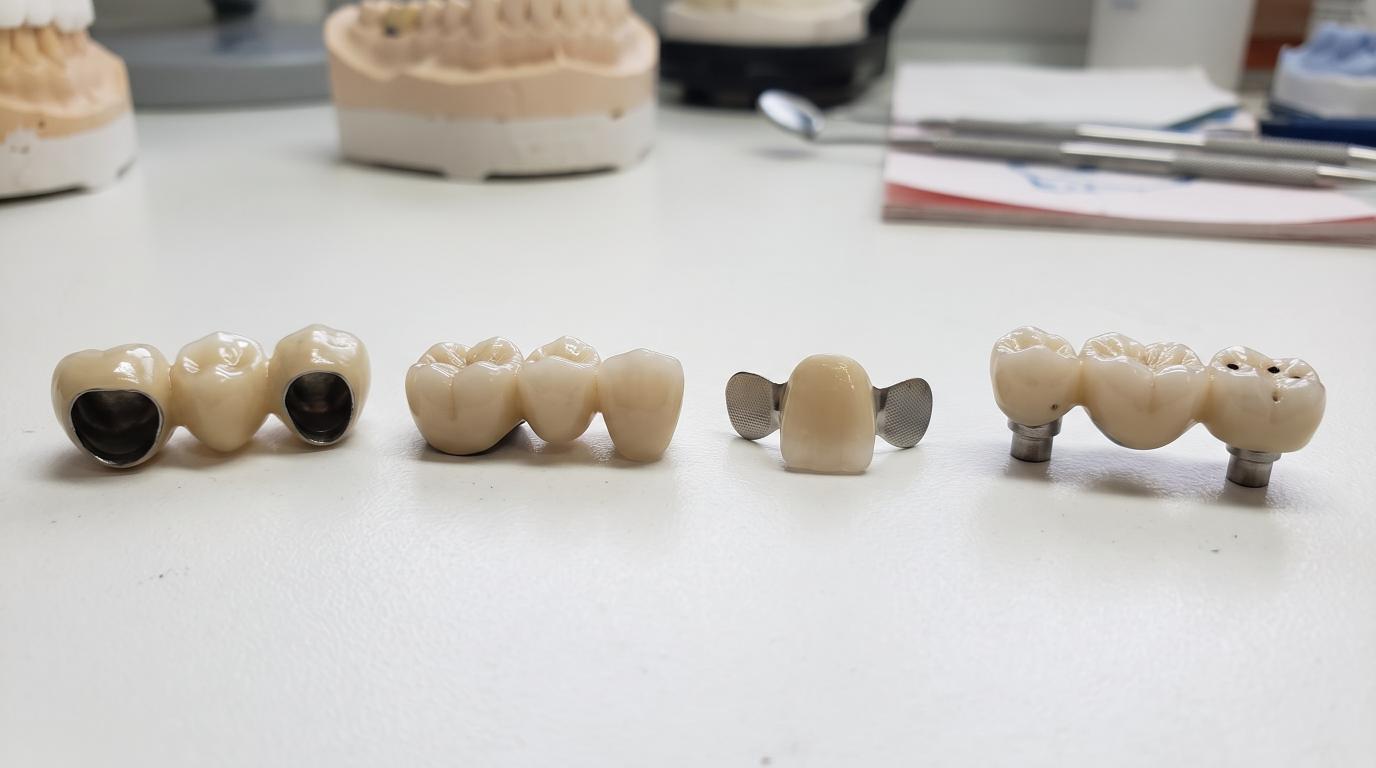
The four main types of dental bridges are traditional, cantilever, Maryland, and implant-supported bridges. Each uses a different method to support replacement teeth. The most suitable design depends on the number of missing teeth, the condition of neighboring teeth, and where the gap is located. Some designs preserve more natural tooth structure, while others require implants or prepared supporting teeth.
Traditional Dental Bridges
A traditional dental bridge uses crowns on natural teeth on both sides of the missing space. The crowns support the artificial tooth between them. This design commonly replaces one or more missing teeth when suitable supports are present. The dentist must permanently reshape the supporting teeth to make room for the crowns.
Cantilever Dental Bridges
A cantilever bridge uses support from only one side of the gap. It may be considered when a suitable supporting tooth is available on one side but not the other. Because the replacement tooth extends beyond its support, chewing forces require careful evaluation. This design is not suitable for every tooth location.
Maryland Dental Bridges
A Maryland bridge, also called a resin-bonded bridge, uses a metal or ceramic framework bonded to neighboring teeth. Its wings usually attach to the backs of those teeth. It is commonly considered for replacing a front tooth because it often requires little removal of natural enamel. However, the bonded attachment may loosen under unsuitable biting conditions.
The success of a Maryland bridge also depends on the condition of the supporting teeth and the available enamel for bonding. Large fillings, existing crowns, and unsuitable biting contacts may affect its stability. A 2023 clinical paper by King, Sood, and Ashley discusses how case selection, tooth position, and restoration design influence the success of resin-bonded bridges.
Implant-Supported Dental Bridges
An implant-supported bridge attaches to dental implants placed in the jawbone instead of depending on neighboring natural teeth. This design can replace several missing teeth without preparing healthy adjacent teeth for crowns. Implant placement requires surgery and healing before the final restoration can be attached. The available bone and overall oral health influence suitability.
How Do the Different Dental Bridge Types Compare?
Dental bridge types differ mainly in how they attach, how much tooth preparation they require, and where they can be used. Traditional and cantilever bridges depend on natural tooth support, while Maryland bridges use adhesive bonding.
Implant-supported bridges require a surgical foundation. The following comparison shows the main differences to discuss during treatment planning.
|
Bridge Type |
Support Method | Tooth Preparation | Typical Use |
Key Consideration |
|
Traditional |
Crowns on teeth on both sides | Supporting teeth reshaped | One or more missing teeth | Needs strong supporting teeth |
| Cantilever | Support from one side | May require crown preparation | Selected single-tooth gaps |
Greater leverage on support |
|
Maryland |
Bonded metal or ceramic wing | Little or none in many cases | Usually a missing front tooth | Needs suitable enamel and bite |
| Implant-supported | Implants placed in jawbone | Usually no adjacent tooth preparation | Multiple missing teeth |
Requires surgery and healing |
A dentist can explain which designs are appropriate after examining the gap and supporting structures.
What Are the Benefits of Dental Bridges?
Dental bridges help replace missing teeth, improve chewing and speaking, and restore the appearance of a complete smile. They can also help maintain the position of neighboring teeth that might otherwise shift toward an empty space. Because fixed bridges remain attached to their supporting structures, they provide a tooth replacement option that does not need to be removed for daily cleaning. The benefits depend on the bridge type, the condition of surrounding teeth, and the patient’s oral health.
Restoring Chewing and Speaking
Missing teeth can make certain foods difficult to chew and affect how biting pressure is distributed across your mouth. A dental bridge provides replacement surfaces that help you bite and chew more comfortably. Front teeth also play an important role in pronunciation. Replacing a missing front tooth may improve speech when the gap interferes with normal tongue and lip movements.
Filling a Visible Gap in Your Smile
A dental bridge can improve the appearance of your smile by replacing a visible missing tooth. Porcelain and other tooth-colored materials can be matched to the surrounding teeth for a natural-looking result. The dentist considers tooth size, shape, shade, and gum position when designing the restoration. These details help the artificial teeth blend with your existing smile.
Helping Prevent Nearby Teeth From Shifting
When a tooth is missing, neighboring teeth may gradually tilt or move into the empty space. The opposing tooth can also move toward the gap, potentially changing how your teeth meet. A properly designed dental bridge helps maintain the space by replacing the missing tooth. However, it cannot automatically correct teeth that have already shifted significantly. Additional treatment may be necessary if the bite has changed.
Who Is a Good Candidate for a Dental Bridge?
Adults who have one or more missing teeth and healthy supporting structures may be suitable candidates for dental bridges. The dentist evaluates the remaining teeth, gum health, jawbone, and bite to determine whether a bridge can provide reliable support. The type of bridge also matters. Traditional bridges require suitable neighboring teeth, while implant-supported bridges depend on adequate bone and successful implant placement. Conditions such as untreated decay or gum disease may need attention before treatment begins.
How the Condition of Supporting Teeth and Gums Matters
Healthy supporting teeth are important for the stability of a traditional dental bridge. These teeth must be strong enough to support the restoration and withstand normal chewing pressure. Deep cavities, loose teeth, or advanced gum disease may affect whether they can safely support a bridge. A dentist may recommend treating these problems before proceeding. Existing crowns or large fillings can also influence the choice of restoration.
How the Location and Size of the Gap Affect Your Options
The number and position of missing teeth help determine which bridge designs are suitable. A single missing front tooth may be replaced with a Maryland bridge when the surrounding teeth and bite allow reliable bonding. Back teeth experience greater chewing forces and may require a traditional or implant-supported design. Longer gaps also need careful evaluation because the supporting structures must withstand pressure across a larger span.
When Another Tooth Replacement Option May Be More Suitable
A dental bridge may not be appropriate when neighboring teeth cannot provide enough support or when multiple missing teeth are spread across different areas of the mouth. A dental implant may be an option for preserving healthy adjacent teeth, provided sufficient bone and suitable oral health conditions are present. Partial dentures can replace teeth in several separate spaces without requiring a fixed bridge across each gap. Your dentist can explain the advantages, limitations, and treatment requirements of each option after examining your mouth.
What Happens During the Dental Bridge Procedure?
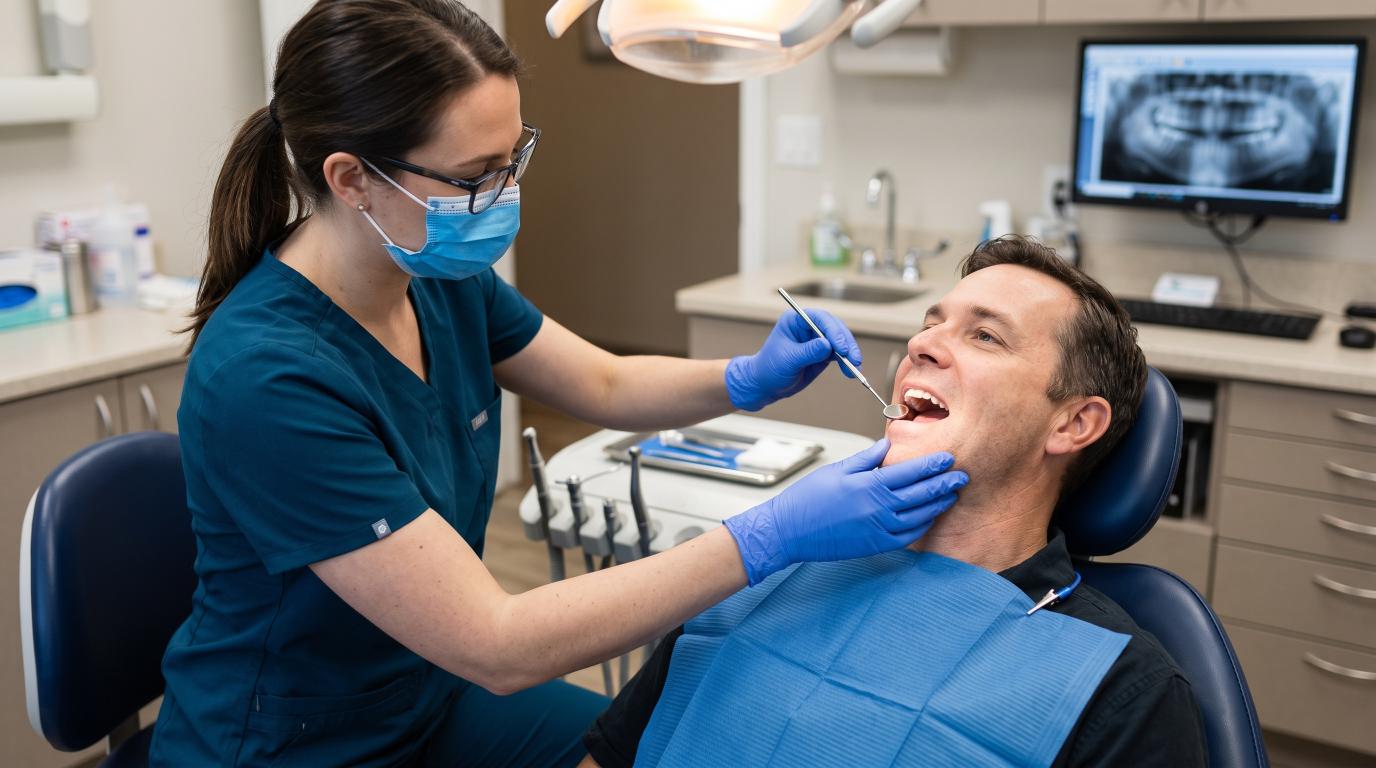
The dental bridge procedure generally involves examining your mouth, preparing the supports when necessary, taking impressions, and fitting the finished restoration. Traditional bridges often require two or more appointments. Implant-supported treatment involves additional stages for implant placement and healing. The exact process depends on your chosen bridge design.
Step 1 Examination and Treatment Planning
The dentist examines your missing-tooth area, surrounding teeth, gums, and bite. Dental X-rays may be taken to evaluate tooth roots and supporting bone. Existing decay or gum problems are identified before treatment begins. You can also discuss available bridge designs, costs, and expected treatment time.
Step 2 Preparing the Supporting Teeth, If Needed
For traditional bridges, the dentist removes a controlled amount of tooth structure to create space for supporting crowns. The area is numbed to reduce discomfort during preparation. Maryland bridges may need little or no tooth preparation. Implant-supported designs instead require implant placement and appropriate healing.
Step 3 Taking Impressions or Digital Scans
The dentist records the shape and position of your teeth using impressions or digital scans. These measurements help the dental laboratory create a bridge that fits the space. The dentist also records your bite and selects the appropriate tooth shade. Accurate records help improve the final fit.
Step 4 Wearing a Temporary Bridge, When Appropriate
A temporary bridge may cover prepared teeth while the permanent restoration is made. It protects exposed tooth surfaces and maintains appearance during this period. Temporary restorations are not designed to handle all the forces of permanent bridges. Avoid very sticky or hard foods and report a loose temporary bridge to your dentist.
Step 5 Fitting and Checking the Final Bridge
The dentist places the finished bridge to check its fit, appearance, and contact with neighboring teeth. Bite adjustments may be made if pressure is uneven. Once the fit is acceptable, the bridge is cemented, bonded, or attached to implants. The dentist then explains how to clean and care for it.
What Materials Are Dental Bridges Made From?
Dental bridges are made from porcelain, other dental ceramics, zirconia, gold alloys, and other metal alloys. Some bridges combine materials, such as porcelain-fused-to-metal (PFM), which has a metal framework covered with tooth-colored porcelain. Porcelain is commonly used for its natural tooth-like appearance, while zirconia is a strong ceramic material suitable for many dental restorations. Gold alloys and other metals offer durability and may be used for back teeth where appearance is less important.
PFM bridges combine metal support with a tooth-colored outer surface. The best material depends on the location of the missing teeth, chewing pressure, appearance preferences, and bridge design. Your dentist will consider these factors when recommending a suitable material.
What Are the Possible Risks and Limitations of Dental Bridges?
The possible risks and limitations of dental bridges include permanent changes to supporting teeth, tooth decay, gum disease, nerve sensitivity, and bridge loosening or damage. An uneven bite may also cause discomfort, while traditional bridges do not prevent bone loss beneath the missing tooth. These problems do not affect every patient, and the risks depend on the bridge type, supporting teeth, and oral health.
Changes to Supporting Teeth
Traditional dental bridges require the dentist to remove some enamel and tooth structure from neighboring teeth to fit the supporting crowns. This preparation is permanent and may leave the teeth more vulnerable to certain complications. Some patients experience sensitivity afterward, while irritation of the tooth’s pulp can occasionally lead to the need for root canal treatment. If an abutment tooth later develops severe decay or fractures, the dentist may need to remove or replace the entire bridge.
Difficulty Cleaning Beneath the Bridge
Cleaning underneath a dental bridge can be more difficult because the artificial teeth are connected to their supports. Plaque and food particles can collect beneath the pontic and around the edges of supporting crowns. Without proper cleaning, bacteria may contribute to tooth decay and gum inflammation. Floss threaders, interdental brushes, or suitable water flossers can help reach these areas. Daily cleaning is important for protecting the natural teeth that hold the bridge.
Potential Loosening, Damage, or Gum Problems
A dental bridge can loosen if its cement or bonding fails, the supporting teeth weaken, or excessive biting forces affect the restoration. Porcelain and ceramic components may also chip or fracture, while an uneven bite can cause discomfort during chewing. Gums may become sore if part of the bridge places unwanted pressure on the tissue.
These complications are also described in a clinical review by Charles Goodacre and colleagues at Loma Linda University, which identified decay in supporting teeth, the need for root canal treatment, and loss of retention among reported problems with conventional dental bridges. Regular examinations help dentists identify these issues before they become more serious.
Jawbone Loss Beneath the Missing Tooth
Traditional and cantilever bridges replace the visible part of missing teeth but do not replace their roots. As a result, the jawbone beneath the missing tooth can gradually shrink after tooth loss. This may change the shape of the gums and affect how the artificial tooth meets the surrounding tissue.
The American Academy of Periodontology explains this limitation of tooth-supported bridges when comparing them with dental implants, which are anchored in the jawbone. However, implants do not guarantee that bone loss will never occur.
How Much Does a Dental Bridge Cost?
Dental bridge costs vary depending on the number of missing teeth, the type of restoration, the materials used, and the complexity of treatment. A bridge replacing a single tooth may require multiple connected units, including crowns on supporting teeth, so the total cost is not always based on the number of missing teeth alone.
Traditional bridges generally involve tooth preparation, impressions, and custom fabrication. Maryland bridges use bonded attachments, while implant-supported bridges require surgery and additional components, which usually increases the upfront cost.
Other factors that may affect your estimate include:
- Bridge materials: Porcelain, zirconia, and metal-based restorations have different fabrication costs.
- Supporting teeth: Existing decay, damaged fillings, or gum problems may require treatment first.
- Dental laboratory work: The design and number of connected units influence the final price.
- Dental insurance: Coverage varies by plan, including deductibles, waiting periods, annual limits, and benefits for major restorative treatment.
Dental insurance may cover part of a tooth-supported bridge, but coverage is not guaranteed. Implant-related procedures may have separate benefits or exclusions. Before choosing treatment, request an itemized estimate that includes the bridge, any necessary preparatory procedures, and expected insurance contributions. This helps you understand your out-of-pocket expenses and compare available options.
How Long Does a Dental Bridge Last?
Dental bridges commonly last 5 to 15 years, although some remain functional longer with proper care. Their lifespan depends on the bridge material, the condition of supporting teeth, oral hygiene, and the amount of pressure placed on the restoration. Traditional bridges rely on natural teeth for support, so decay, gum disease, or damage to these teeth can affect longevity. Maryland bridges may require rebonding if their attachments loosen, while implant-supported bridges depend on the health of the implants and surrounding tissues.
A long-term clinical study of tooth-supported dental bridges reported estimated survival rates of 90.4% after 10 years and 80.5% after 15 years. These findings show that many bridges remain functional for years, although their survival does not mean they remain free of complications.
Brushing twice daily, cleaning beneath the artificial teeth, and attending regular dental checkups can help protect the bridge and its supports. Avoiding hard objects and managing teeth grinding may also reduce unnecessary stress. A dental bridge is a long-term replacement for missing teeth, but it may eventually require repair or replacement because of wear, loosening, or changes in surrounding teeth.
How Do You Care for a Dental Bridge?
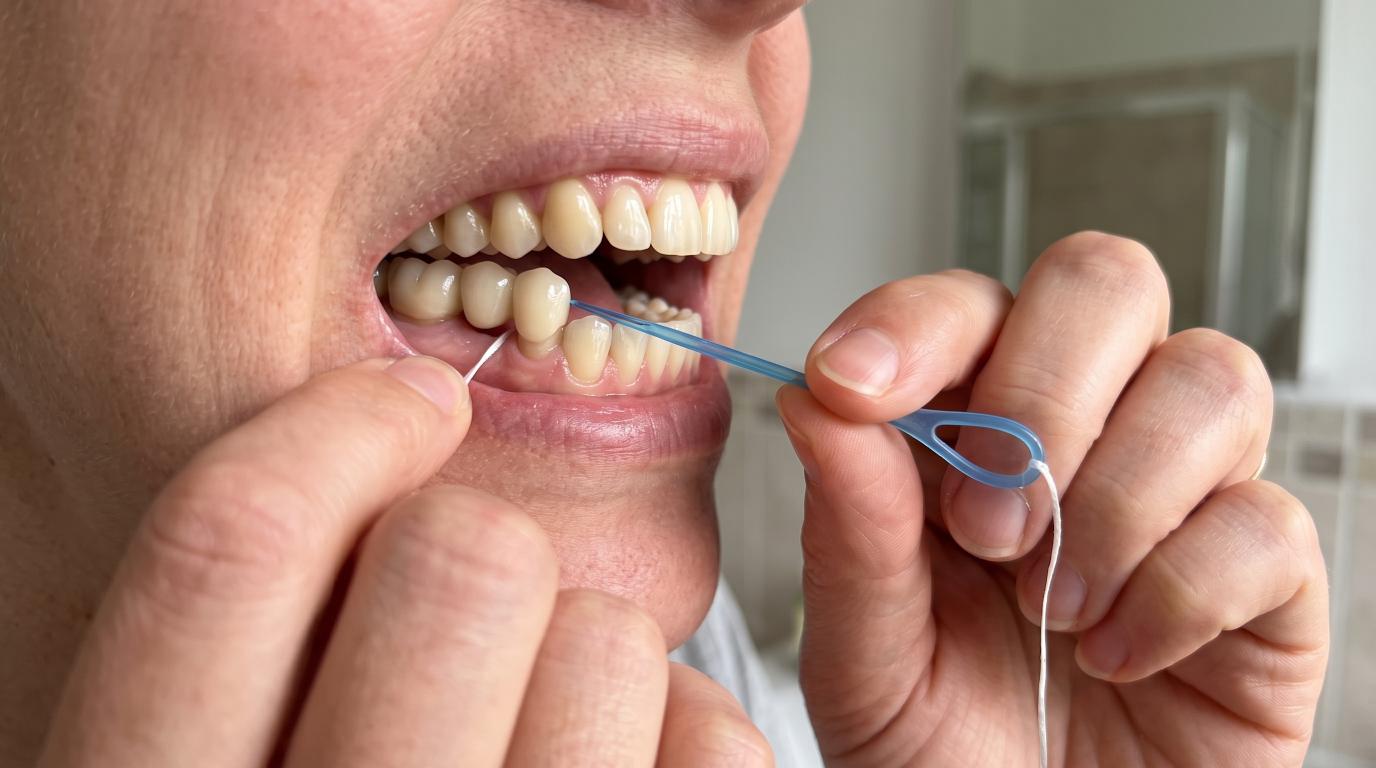
You care for a dental bridge by brushing regularly, cleaning underneath the artificial teeth, and attending dental checkups. Good oral hygiene protects the supporting teeth and gums. Because a bridge has connected replacement teeth, certain areas need more attention than ordinary tooth surfaces.
Use this practical daily checklist:
- Brush twice daily with a soft-bristled toothbrush and fluoride toothpaste.
- Clean beneath the pontic daily using a floss threader or another tool recommended by your dentist.
- Clean along the gumline to remove plaque around supporting teeth.
- Avoid biting ice and hard objects that could damage the restoration.
- Attend routine dental checkups to monitor the bridge and surrounding teeth.
If you have trouble reaching beneath the bridge, ask your dentist to demonstrate the correct technique rather than leaving that area uncleaned.
What Should You Do If Your Dental Bridge Feels Loose or Hurts?
Contact your dentist promptly if your dental bridge feels loose, hurts when chewing, or causes ongoing sensitivity. Movement or discomfort may indicate a problem with its attachment, supporting teeth, or bite. Do not attempt to repair or glue a loose bridge at home. Household adhesives are not suitable for dental restorations and can interfere with proper treatment.
Avoid chewing hard foods on the affected side until the bridge has been examined. If the bridge comes out completely, keep it in a clean container and bring it to your appointment. Do not force it back into place. Severe swelling, fever, or worsening pain may indicate an infection requiring urgent evaluation. Difficulty breathing or swallowing requires emergency medical care.
Conclusion
Dental bridges provide a fixed way to replace missing teeth, improve chewing and speaking, and restore the appearance of your smile. Traditional, cantilever, Maryland, and implant-supported bridges offer different advantages depending on the number of missing teeth, the condition of nearby teeth, and the support available. Although dental bridges commonly last 5 to 15 years, their lifespan depends on oral hygiene, bridge materials, bite pressure, and the health of supporting teeth.
Cleaning beneath the artificial teeth, attending regular dental checkups, and addressing discomfort or looseness early can help protect your restoration. Choosing between a dental bridge, dental implant, or partial denture depends on your oral health, treatment goals, and budget. A dental examination can help you understand the most suitable option for replacing missing teeth.
Schedule a Dental Bridge Consultation in Gilbert, AZ
Missing a tooth and considering a dental bridge? Vista Dorada Dental in Gilbert, AZ can help you understand your tooth replacement options and determine whether a bridge may be suitable for your needs. During your consultation, a dentist can assess the surrounding teeth, gums, and bite, explain the available dental bridge types, and discuss treatment steps and expected costs. Take the next step toward restoring your smile. Schedule your dental consultation or call (480) 963-9900 to discuss your options for replacing missing teeth.
Frequently Asked Questions
Can You Get a Dental Bridge Immediately After a Tooth Extraction?
A temporary bridge may be possible soon after extraction, but a permanent bridge often requires time for the gums to heal. Your dentist will determine the right timing based on the extraction site and bridge design.
Does Getting a Dental Bridge Hurt?
Getting a dental bridge is usually not painful because the dentist numbs the area during tooth preparation. Mild sensitivity or soreness may occur afterward, but persistent pain should be checked by your dentist.
Can You Eat Normally With a Dental Bridge?
Yes, most people can eat normally once they adjust to their permanent dental bridge. Start with softer foods if needed, and avoid chewing very hard objects that could damage the restoration.
Can a Dental Bridge Be Replaced if It Breaks?
Yes, a broken dental bridge can usually be replaced, while minor damage may sometimes be repaired. Your dentist will examine the bridge and supporting teeth to determine the best option.
Is a Dental Bridge Better Than a Partial Denture?
A dental bridge may be better if you prefer a fixed replacement and have healthy supporting teeth. A partial denture is removable and can replace teeth in multiple gaps. The best choice depends on your dental needs.