




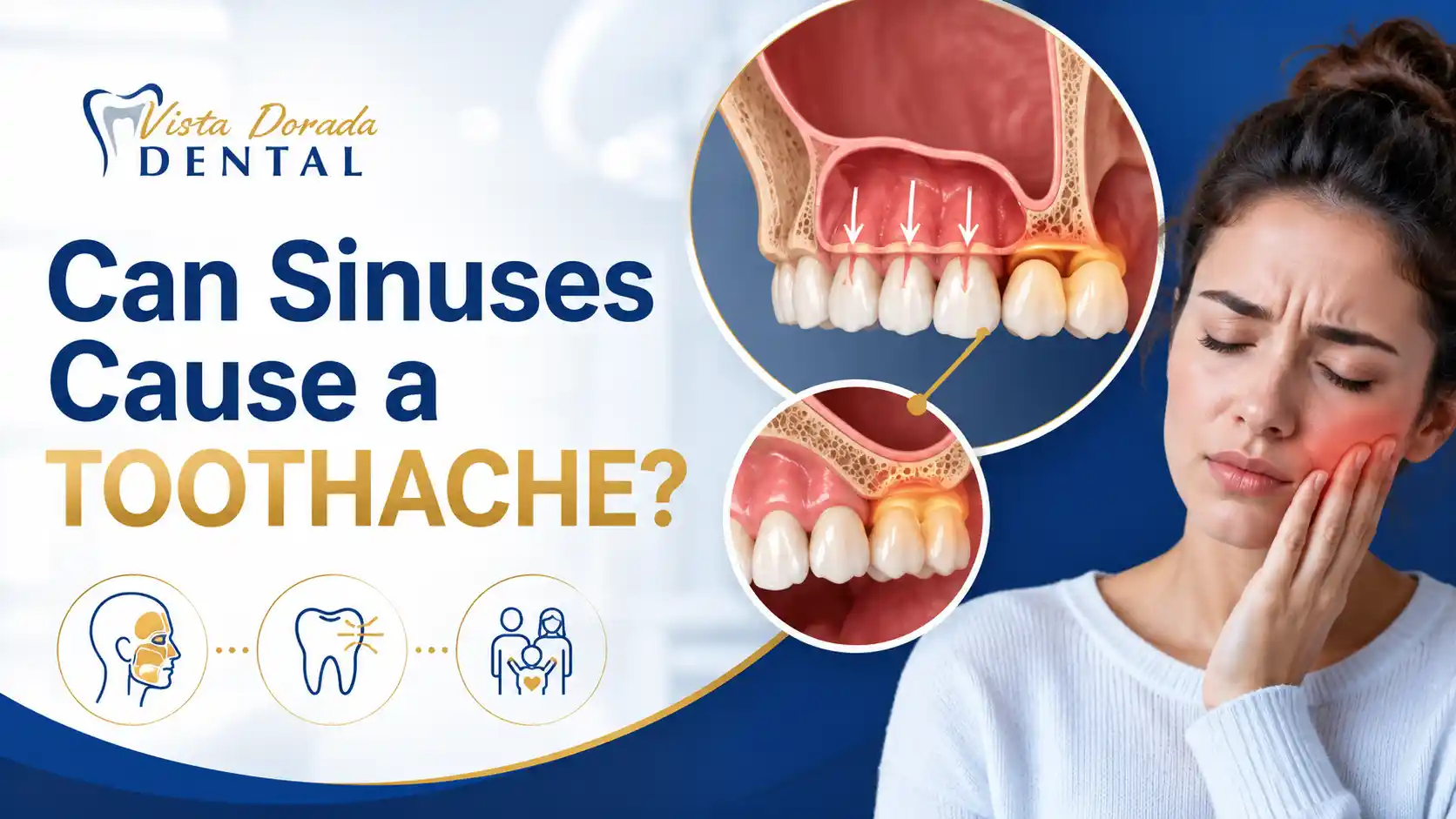






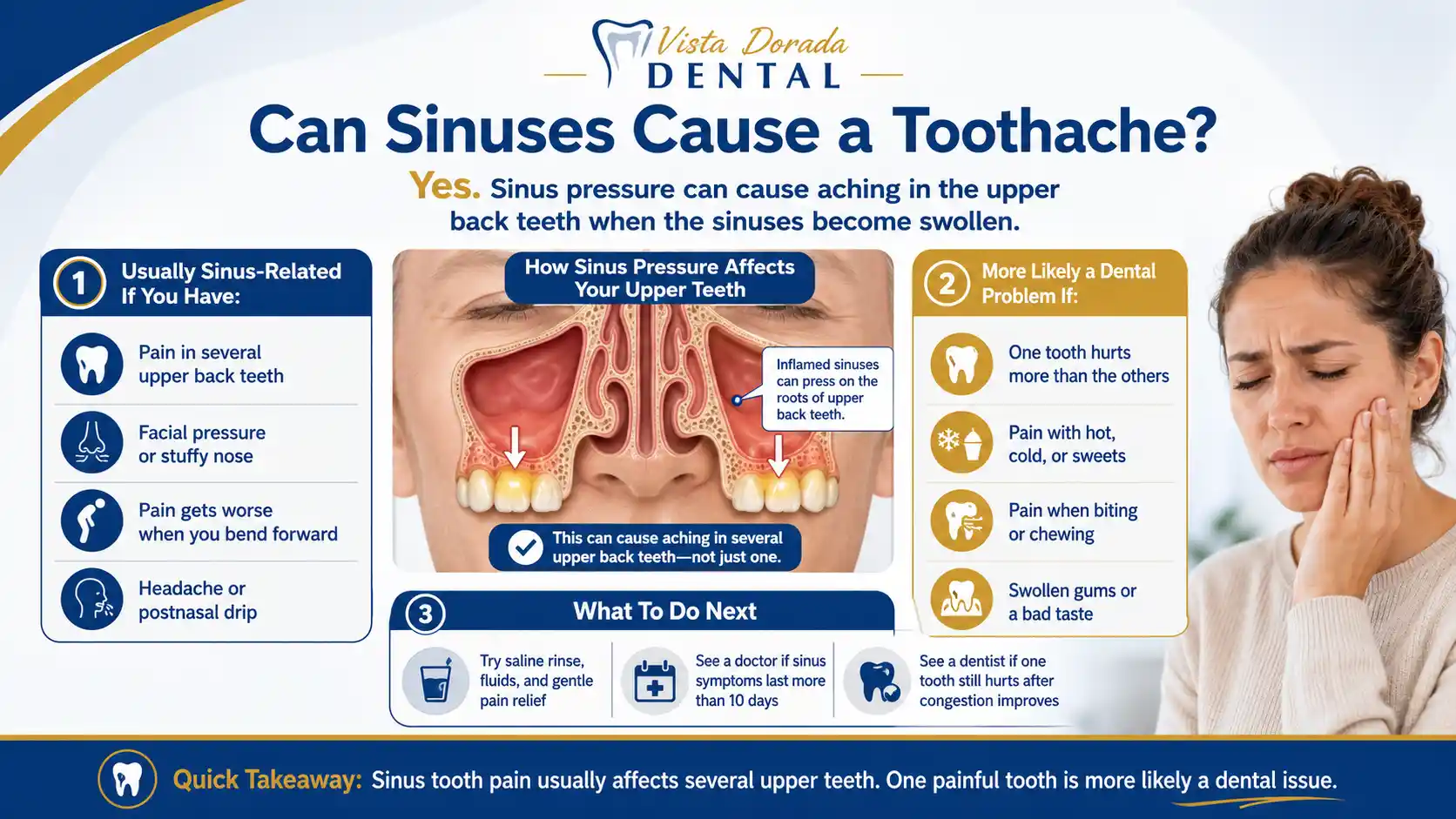
Yes, sinuses can cause a toothache, especially in the upper back teeth. The maxillary sinuses sit close to the roots of these teeth. When sinus tissue becomes swollen, pressure can irritate nearby nerves and create a dull ache across several teeth.
Sinus tooth pain often occurs with nasal congestion, facial pressure, headache, postnasal drip, or a reduced sense of smell. It may also feel worse when you bend forward. In contrast, pain focused on one tooth, sensitivity to hot or cold, or sharp pain while biting is more likely to come from a dental problem.
At Vista Dorada Dental in Gilbert, AZ, our team can help determine whether persistent tooth pain is related to your sinuses or an underlying dental issue. Mild sinus-related pain may improve as congestion clears, while fluids, warm compresses, saline rinses, and suitable pain relief may help. However, see a dentist if one tooth remains painful or the discomfort continues after your sinus symptoms improve. Seek urgent dental or medical care for fever with facial swelling. Difficulty breathing or swallowing requires emergency medical attention.
Why Sinus Problems Can Affect Your Teeth
Sinus problems can cause tooth pain because the maxillary sinuses sit close to the roots of your upper back teeth. When these sinuses become inflamed due to a cold, allergies, or infection, pressure and irritation can affect nearby nerves, creating discomfort that feels like a toothache. The maxillary sinuses are air-filled spaces inside the cheekbones, just above the upper jaw. In some people, only a thin layer of bone separates the sinus floor from the roots of the upper premolars and molars.
This close relationship allows sinus inflammation to cause referred pain, meaning discomfort is felt in the teeth even when they are healthy. Sinus-related tooth pain commonly occurs alongside nasal congestion, facial pressure, and headaches. However, pain isolated to one tooth or accompanied by prolonged sensitivity to hot or cold foods may indicate a dental problem rather than sinus inflammation.
Which Teeth Are Most Likely to Hurt?
Sinus-related tooth pain usually affects the upper back teeth because their roots are close to the maxillary sinuses. The teeth most commonly affected include:
- Upper premolars: These teeth sit toward the back of the upper jaw and may become uncomfortable when nearby sinus tissue is inflamed.
- Upper first molars: Their roots can be particularly close to the sinus floor, making them a common location for referred discomfort.
- Upper second molars: These teeth may also feel sore or sensitive when inflammation affects the maxillary sinuses.
Sinus pressure may cause a dull ache across several upper teeth rather than pain in one specific tooth. Discomfort can occur on one or both sides, depending on which sinus is affected. Pain limited to one tooth, especially when biting or eating hot or cold foods, may indicate decay, a cracked tooth, or another dental condition. A dental examination can help identify the actual cause.
Can a Sinus Infection Cause Pain in Bottom Teeth?
A sinus infection usually causes discomfort in the upper back teeth because their roots are close to the maxillary sinuses. Pain in the bottom teeth is less likely to come directly from sinus pressure, although different conditions can cause overlapping symptoms. If you experience lower tooth pain during a sinus infection, consider whether a separate dental problem may be responsible.
Common causes include tooth decay, cracked teeth, gum infections, or inflammation inside a tooth. According to the American Association of Endodontists, tooth pain may result from decay, cracks, or infection. Pain that affects one lower tooth, becomes worse when biting, or causes prolonged sensitivity to hot or cold temperatures should be evaluated. A dental examination can help identify the source of the pain and determine whether treatment is necessary.
Simple Ways to Check Where the Pain May Be Coming From
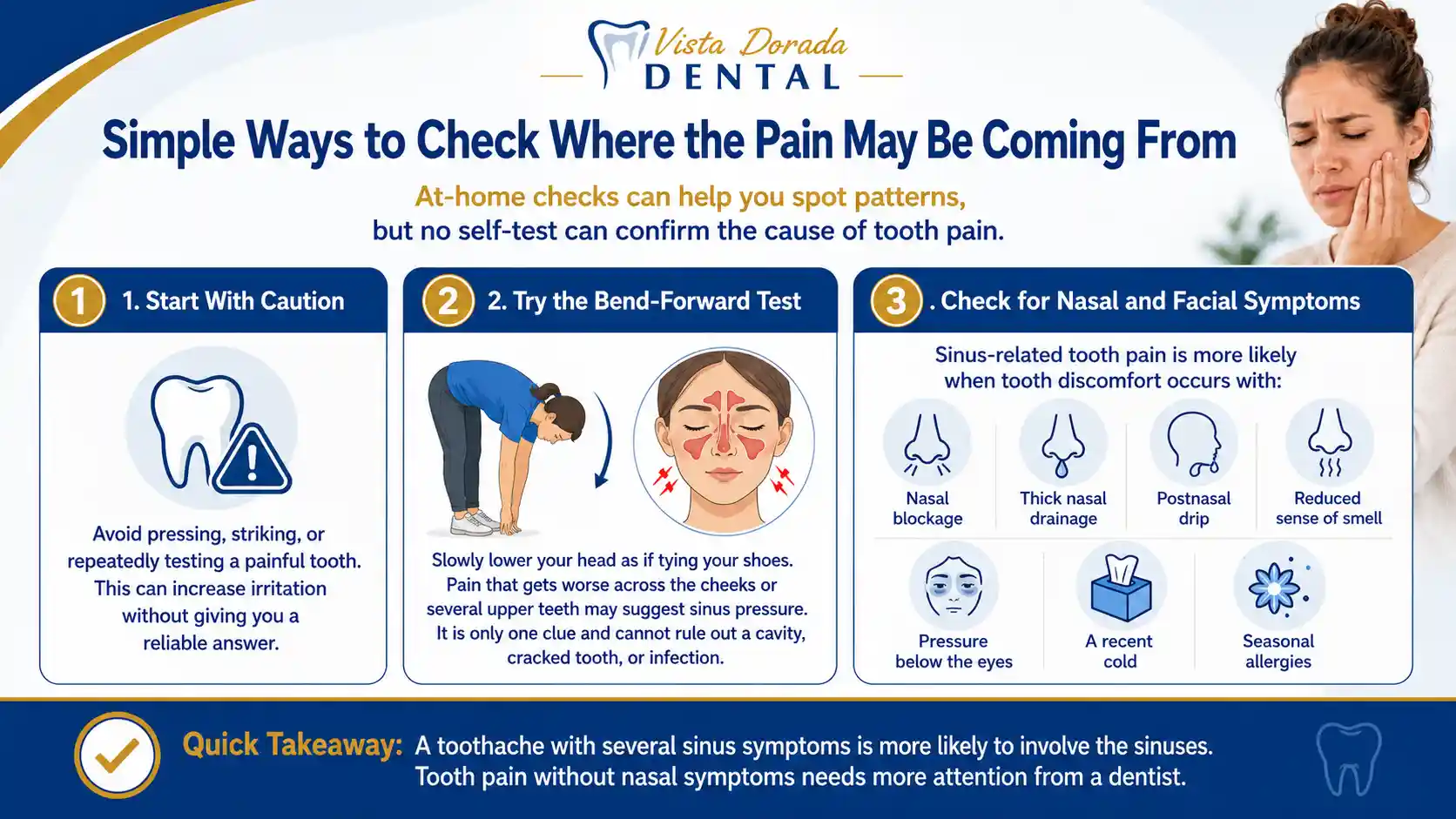
You can look for patterns at home, but no self-test can confirm the cause of tooth pain. Avoid pressing, striking, or repeatedly testing a painful tooth. This may increase irritation without giving you a reliable answer.
Checking for Nasal and Facial Symptoms
Consider whether you also have:
- Nasal blockage
- Thick nasal drainage
- Postnasal drip
- Reduced sense of smell
- Pressure below the eyes
- A recent cold
- Active seasonal allergies
A toothache with several of these symptoms is more likely to involve the sinuses. Tooth pain without nasal symptoms needs more attention from a dentist.
Testing Sensitivity to Heat, Cold, and Pressure
Notice whether one tooth reacts when you drink something hot or cold. Lingering sensitivity can point toward inflammation inside the tooth. Pain focused on one tooth while biting can also suggest a crack, infection, or damaged tissue around the root. Do not place ice directly against the tooth for testing. Do not keep chewing on the painful side to see whether the pain returns.
Sinus Toothache vs. Dental Toothache
Sinus-related tooth pain and dental toothaches can feel similar, but certain symptoms may help identify the possible cause. Sinus pressure commonly affects the upper back teeth, while dental problems may cause pain in one specific tooth. However, symptoms can overlap, so a professional examination may be necessary.
|
Feature |
Sinus Toothache |
Dental Toothache |
|
Pain location |
Often affects several upper back teeth | May affect one specific tooth |
| Type of pain | Dull aching, fullness, or pressure |
Sharp, throbbing, or persistent pain |
|
Nasal symptoms |
Often occurs with congestion or facial pressure | Usually absent unless a sinus condition is also present |
| Bending forward | Sinus pressure may become more noticeable |
Not a reliable way to identify the cause |
|
Hot or cold sensitivity |
Less typical | May occur with decay or inflammation inside the tooth |
| Pain when biting | Not usually limited to one tooth |
May worsen when chewing or biting |
|
Gum swelling |
Not usually a primary symptom | May occur with a dental infection |
| Recommended care | Medical evaluation for persistent sinus symptoms |
Dental examination for ongoing tooth pain |
These differences can provide clues, but they cannot confirm the cause of a toothache. For example, sinus pressure may increase when bending forward, but this symptom alone cannot distinguish sinusitis from other conditions.
If the pain affects one tooth, continues after nasal congestion improves, or becomes worse when chewing, schedule a dental examination. The dental team can check for cavities, cracks, gum problems, or infection and determine whether further medical evaluation is appropriate.
Sinus Conditions That Can Cause Tooth Pain
Several conditions can create pressure in the maxillary sinuses. The cause affects how long the pain lasts and how it should be managed.
Acute Sinus Infections
Acute sinusitis often follows a cold. Symptoms may include nasal blockage, facial pressure, discharge, headache, and upper tooth pain. Most acute sinus infections are viral. They often improve without antibiotics. A healthcare provider may suspect a bacterial infection when symptoms last over 10 days without improvement or worsen after getting better.
Chronic Sinusitis
Chronic sinusitis involves symptoms and inflammation that continue for at least 12 weeks. The symptoms may be less intense than an acute infection, but they last longer. Ongoing blockage, allergies, nasal polyps, structural problems, or repeated infections may contribute. Chronic sinusitis requires a proper medical diagnosis rather than repeated self-treatment.
Allergies and Nasal Congestion
Allergies can swell the tissues inside the nose and block normal sinus drainage. The trapped pressure may cause facial discomfort and aching in the upper teeth. Allergy symptoms often include sneezing, itchy eyes, clear drainage, and a blocked nose. Treating the underlying allergy can reduce pressure and prevent repeated sinus pain. Nasal corticosteroid sprays and antihistamines may help certain allergy symptoms. Ask a healthcare provider or pharmacist which option is suitable for you.
Changes in Air Pressure
Air travel and scuba diving create rapid pressure changes. Blocked sinus openings may prevent pressure from equalizing normally. This can lead to sharp facial or sinus pain. Pressure changes can also cause pain around tooth roots or dental fillings. Dental decay or damaged restorations may make this problem more likely. Consider a dental or medical check if tooth pain repeatedly starts during flights or diving.
Can a Dental Infection Cause Sinus Problems?
Yes, an infection in an upper tooth can spread to the nearby maxillary sinus and cause inflammation known as odontogenic sinusitis. This can happen when bacteria from deep tooth decay, a cracked tooth, or an infected root reach the tissues surrounding the sinus.
Dental-related sinus infections may cause symptoms such as:
- One-sided nasal congestion: Blockage or pressure that mainly affects one side of the face.
- Unpleasant nasal drainage: Foul-smelling discharge or a persistent bad taste.
- Facial pressure: Discomfort around the cheeks or upper jaw.
- Recurring sinus symptoms: Congestion or sinus problems that continue despite usual treatment.
- Upper tooth discomfort: Pain may occur, although some infected teeth cause little or no noticeable dental pain.
According to the American Association of Endodontists, an infected upper tooth can contribute to maxillary sinusitis even without typical toothache symptoms. A dental examination, appropriate imaging, and sometimes an evaluation by an ear, nose, and throat specialist may be needed to identify the cause. Treatment must address the dental infection, which may require root canal treatment, extraction, or other appropriate dental care. Sinus medication alone may not resolve an infection that originates from a tooth.
How to Relieve Tooth Pain Caused by Sinus Pressure
The most helpful steps reduce sinus congestion and manage pain while your body recovers. Home care may ease mild symptoms. It does not replace dental or medical treatment when an infection, abscess, or other condition is present.
Stay Hydrated
Drink enough water throughout the day. Fluids may help keep mucus thinner and easier to drain. Warm drinks can also feel soothing when you have throat irritation or postnasal drip. Avoid using very hot drinks if your teeth are sensitive.
Use Steam or a Warm Compress
Place a warm, moist cloth over your cheeks for several minutes. Gentle warmth may help ease facial pressure. A warm shower may also make thick mucus easier to clear. Avoid placing your face over boiling water. Hot steam can burn the skin and airways.
Try a Saline Nasal Rinse
Saline irrigation can help loosen mucus and remove allergens or debris. Use the device exactly as directed. Only use distilled, sterile, or previously boiled and cooled water. Tap water is not considered safe for nasal rinsing. Clean and dry the device after every use. Ask a healthcare provider before rinsing if you have a weak immune system or recent nasal surgery.
Use Over-the-Counter Pain Relief Safely
A nonprescription pain reliever may reduce sinus pressure and tooth discomfort. Follow the label and never take more than directed. Some pain medicines are unsuitable for people with certain medical conditions. They may also interact with other drugs. Ask a pharmacist when you are pregnant, take blood thinners, or have kidney, liver, stomach, or heart problems. Do not place aspirin or another painkiller directly against your gums. It can damage gum tissue.
Use Decongestants With Care
Decongestants may temporarily reduce nasal swelling. However, they are not safe for everyone. Nasal decongestant sprays should generally not be used for more than three days unless a clinician advises otherwise. Longer use can cause congestion to return or become worse. Ask a pharmacist before using a decongestant if you have high blood pressure, heart problems, glaucoma, or take other medicines.
Avoid Common Home-Remedy Mistakes
Avoid these common mistakes:
- Assuming every upper toothache is sinus pain
- Taking leftover antibiotics
- Using a nasal spray longer than directed
- Rinsing your sinuses with untreated tap water
- Placing aspirin against your gums
- Delaying care for swelling or severe pain
- Applying extreme heat to the face
- Ignoring pain focused on one tooth
Home care should improve comfort, not delay diagnosis.
How Sinus-Related Tooth Pain Is Treated
Treatment depends on whether the cause is viral, bacterial, allergic, chronic, or dental.
Treatment for Viral Sinusitis
Most acute sinus infections are caused by viruses and get better without antibiotics. Treatment may focus on pain relief, saline irrigation, fluids, rest, and nasal corticosteroid sprays when appropriate. Antibiotics do not treat viruses and can cause unwanted side effects.
Treatment for Bacterial Sinusitis
A clinician may consider bacterial sinusitis when symptoms persist without improvement or become worse after starting to recover. Current adult sinusitis guidance supports watchful waiting for uncomplicated cases when follow-up is available. A clinician may prescribe antibiotics when they are appropriate. Do not start, stop, or share antibiotics without professional instructions.
Treatment for Allergies and Chronic Sinus Problems
Chronic or allergy-related symptoms may need saline irrigation, nasal corticosteroid sprays, allergy management, or further testing. An ear, nose, and throat specialist may use nasal endoscopy or imaging to confirm chronic inflammation. Surgery is not the first treatment for every case, but it may be considered when other treatments fail.
Dental Treatment When the Tooth Is the Cause
Dental treatment depends on the condition. It may involve:
- Removing decay and placing a filling
- Repairing a cracked tooth
- Root canal treatment
- Draining an abscess
- Treating gum disease
- Removing a tooth that cannot be saved
Antibiotics alone usually do not fix the source of dental pain. The tooth often needs direct treatment. The American Dental Association recommends prioritizing dental treatment for many forms of tooth pain and localized swelling.
How Long Does a Sinus Toothache Last?
Sinus tooth pain usually improves as the swelling and pressure inside the sinuses decrease. Acute sinusitis may last up to four weeks, although many viral cases begin improving much sooner. Tooth pressure often fades over several days as mucus drains and inflammation settles.
The timeline depends on what is causing the sinus problem. Allergy-related pressure may continue while you remain exposed to the trigger. Chronic sinusitis can last for 12 weeks or longer and may require medical treatment if symptoms do not improve.
When the Pain Should Begin to Improve
Sinus-related tooth pain often begins to improve as nasal congestion and inflammation decrease. With a mild viral sinus infection, discomfort may ease gradually over several days as sinus pressure subsides.
The improvement may be slower when allergies or persistent sinus inflammation are involved. If tooth pain becomes more intense instead of improving, the cause may need further evaluation. Pain that continues despite improving sinus symptoms should not automatically be attributed to sinus pressure.
Why Tooth Pain May Continue After Sinus Symptoms Ease
Tooth pain that remains after nasal congestion improves may indicate a separate dental problem. Cavities, cracked teeth, gum infections, or inflammation inside a tooth can cause discomfort that initially feels similar to sinus pressure.
Dental pain may become more noticeable when chewing, biting, or consuming hot or cold foods. Unlike sinus-related discomfort, these symptoms may continue even after nasal breathing and facial pressure return to normal. A dental examination can help identify whether the remaining pain comes from a tooth or another condition requiring treatment.
When to See a Dentist or Doctor
Whether you need dental or medical care depends on the location of your tooth pain and any accompanying symptoms. Pain concentrated in one tooth may indicate a dental problem, while discomfort across several upper teeth with nasal congestion may suggest sinus inflammation.
When to Schedule a Dental Examination
Schedule a dental visit if pain affects one tooth, worsens when chewing, or causes prolonged sensitivity to hot or cold temperatures. Persistent pain, swollen gums, or a bad taste may also indicate a cavity, cracked tooth, or dental infection. If your sinus congestion improves but the toothache remains, a dental examination can help identify whether an oral health condition requires treatment.
When to Contact a Medical Provider
Contact a healthcare provider when sinus symptoms last more than 10 days without improving, become worse after initial improvement, or involve a fever lasting more than three to four days.
Severe facial pain, recurring sinus infections, or prolonged nasal congestion may require further medical evaluation. Depending on the symptoms, referral to an ear, nose, and throat specialist may be appropriate. The Centers for Disease Control and Prevention recommends medical evaluation for persistent, worsening, or severe sinus infection symptoms.
Warning Signs That Need Urgent Care
Seek emergency medical attention if tooth or facial pain occurs with:
- Difficulty breathing, swallowing, or speaking.
- Severe or rapidly spreading facial or neck swelling.
- Swelling around the eye, especially with changes in vision.
- Confusion, severe weakness, or other signs of serious illness.
Fever with increasing facial swelling or significant difficulty opening the mouth also requires urgent assessment. These symptoms may indicate a serious infection and should not be managed with home remedies alone.
How to Reduce the Risk of Future Sinus Tooth Pain
You cannot prevent every cold, allergy flare, or sinus infection, but healthy habits may lower your risk. Wash your hands regularly, avoid smoking and secondhand smoke, manage seasonal allergies, and use a clean humidifier when the air is dry. Keep nasal-rinse devices clean and always use distilled, sterile, or previously boiled water.
Regular dental checkups, twice-daily brushing with fluoride toothpaste, daily cleaning between the teeth, and prompt repair of damaged teeth or fillings can also help prevent dental pain from being mistaken for sinus pressure. Good sinus care cannot replace dental care, and healthy teeth cannot prevent every sinus infection. Because the maxillary sinuses sit close to the upper tooth roots, paying attention to both areas is the best way to reduce repeated pain.
Conclusion
Sinus inflammation can cause tooth pain, especially in the upper back teeth near the maxillary sinuses. The discomfort often occurs alongside nasal congestion, facial pressure, or headaches and may improve as the sinus condition resolves. However, pain focused on one tooth, persistent sensitivity, or discomfort while chewing may indicate a dental problem.
An infected upper tooth can also contribute to sinus inflammation. If tooth pain continues after your sinus symptoms improve, seek a dental examination. Identifying the actual cause is the safest way to get appropriate treatment and avoid unnecessary delays.
Get Help for Persistent Tooth Pain in Gilbert, AZ
Not sure whether your toothache is caused by sinus pressure or a dental problem? At Vista Dorada Dental in Gilbert, AZ, our team can examine your teeth and gums to check for cavities, cracks, infections, and other causes of discomfort. If your pain continues after sinus congestion improves or becomes worse when biting, a dental examination can help identify the problem.
Getting the right diagnosis can help you avoid unnecessary treatment and address dental problems before they become more serious. Book your appointment today to discuss your symptoms and get appropriate care.
Frequently Asked Questions
Can Sinuses Cause Pain in the Lower Teeth?
Sinus-related tooth pain usually affects upper premolars and molars. These teeth sit close to the maxillary sinuses. Lower tooth pain is less typical and may come from decay, gum disease, a crack, or another dental condition. See a dentist if pain is focused in a lower tooth or continues for more than two days.
Can a Sinus Infection Make One Tooth Hurt?
It can, especially when inflammation is stronger on one side. However, sinus pain more often affects several upper teeth together. Pain isolated to one tooth should be checked for decay, a crack, damaged dental work, or an infection. Do not rely on nasal symptoms alone to rule out a dental problem.
How Do I Know Whether My Toothache Is From My Sinuses?
Sinus tooth pain usually affects several upper teeth and occurs with nasal blockage, facial pressure, or postnasal drip. Dental pain is more likely to affect one tooth and react to biting, heat, cold, or sweets. These signs are not always conclusive. A dentist or healthcare provider may need to examine you.
Will Sinus Tooth Pain Go Away on Its Own?
It may improve as a mild viral sinus infection clears. Saline irrigation, fluids, gentle warmth, and suitable pain relief may help. Seek care when symptoms last longer than 10 days, worsen after improving, or include severe facial pain. See a dentist when one tooth remains painful after congestion improves.
Can Sinus Pressure Cause Tooth Sensitivity?
Sinus pressure can make upper teeth feel tender or uncomfortable, especially while chewing. Clear sensitivity to hot, cold, or sweet foods is more closely linked with dental problems. Lingering temperature sensitivity should be assessed by a dentist because it may involve the tooth nerve.
Can a Tooth Infection Be Mistaken for a Sinus Infection?
Yes. An infected upper tooth can inflame the nearby maxillary sinus. This may cause one-sided congestion, facial pressure, bad-smelling drainage, or a foul taste. Symptoms may return until the dental source is treated. Both dental and ear, nose, and throat care may be needed.
Should I See a Dentist or a Doctor for Sinus Tooth Pain?
See a dentist when pain is focused on one tooth, lasts more than two days, or reacts to biting or temperature. Contact a medical provider when you have strong nasal symptoms, facial pressure, fever, or symptoms lasting over 10 days. Seek urgent care for eye swelling or trouble breathing or swallowing.