
Is Fluoride Treatment Safe for Children’s Teeth?

Yes, fluoride treatment is safe for children’s teeth when used in recommended amounts. Professional fluoride varnish helps strengthen enamel, prevent cavities, and slow early tooth decay. It is also considered safe for toddlers when applied correctly. However, swallowing too much fluoride over time during tooth development can cause dental fluorosis, so proper use matters. Parents should understand how fluoride treatment for children differs from daily toothpaste use. At Vista Dorada Dental in Gilbert, AZ, families can discuss their child’s cavity risk, fluoride exposure, and appropriate preventive care. This guide explains the benefits, possible risks, age-based recommendations, and what parents should expect during and after a professional fluoride application. What Is Fluoride and Why Is It Important for Children? Fluoride is a natural mineral that has been used in dentistry for decades. It makes teeth stronger and more resistant to the acid that causes cavities. It also helps with remuneration meaning it can repair early decay before it turns into a real cavity. Children need this protection more than adults because their enamel is thinner and softer, making young teeth easier targets for decay. Cavities in baby teeth can cause pain, trouble eating, and even damage to the permanent teeth growing underneath. How Fluoride Works in Children’s Teeth Every time your child eats something sugary, bacteria in the mouth release acid that slowly eats away at the enamel. Over time, this leads to cavities. Fluoride works like a shield. It strengthens enamel by attracting calcium and phosphate to rebuild what acid breaks down. If early damage has already started, fluoride can even reverse it before a real cavity forms. This is why fluoride is not just about preventing cavities. It is about keeping your child’s teeth strong through years of eating and growing. Is Fluoride Treatment Safe for Children’s Teeth? Yes, professional fluoride treatment is generally safe for children when applied correctly. Dentists use a small, measured amount of fluoride varnish that stays in contact with the teeth while limiting how much is swallowed. It can be used for young children, including toddlers, after their first teeth appear. The American Dental Association’s clinical guidelines recommend 2.26% fluoride varnish for children younger than six who are at risk of cavities. Other professional fluoride products may be appropriate for older children. The dentist considers age, cavity risk, and existing fluoride exposure before recommending treatment. Types of Fluoride Treatments for Children There are several types of fluoride treatments available for children, each designed to strengthen teeth, prevent cavities, and support healthy oral development. Fluoride Toothpaste Fluoride toothpaste is the most common form of fluoride for children, used twice a day during regular brushing. Pediatrics’s dentists recommend fluoride toothpaste in small amounts from the first tooth onward. For children under 3, use only a tiny smear, about the size of a grain of rice. From ages 3 to 6, a pea-sized amount is the right quantity. Fluoride Varnish Fluoride varnish is the treatment most commonly applied at dental offices. Your dentist will paint a thin layer of fluoride varnish on your child’s teeth. Fluoride varnish is a sticky yellow or orange substance that often has a pleasant taste. Varnish is much stronger than toothpaste because it delivers a higher concentration of fluoride directly to the tooth surface. The varnish becomes firm when it contacts saliva and stays on the teeth, helping limit the amount of fluoride your child may swallow. Fluoride Mouth Rinses Fluoride mouth rinses provide an additional layer of protection for older children. They are not recommended for children under 6 because younger children have not yet developed the ability to reliably spit rather than swallow. For children 6 and older who are at higher risk for cavities, a dentist may recommend a fluoride rinse as part of the daily oral care routine. Benefits of Fluoride Treatment in Children Fluoride treatment helps prevent cavities, strengthens tooth enamel, and slows early tooth decay. It protects both baby teeth and permanent teeth by helping enamel resist acids produced by bacteria. Fluoride can also support remineralization before early enamel damage becomes a permanent cavity. A Cochrane systematic review of fluoride varnishes examined clinical trials involving children and adolescents and found that fluoride varnish reduces tooth decay. Preventing cavities may reduce the need for fillings and other dental procedures. However, professional applications work best alongside regular brushing, healthy eating habits, and routine dental care. Are There Any Risks or Side Effects? Fluoride treatment is generally well tolerated, but excessive fluoride intake can cause problems. Dental fluorosis develops when children consume too much fluoride while their permanent teeth are forming. Mild cases appear as faint white lines or spots, while more severe cases can cause noticeable enamel changes. The American Academy of Pediatric Dentistry’s fluoride therapy guidance emphasizes using fluoride according to a child’s age, cavity risk, and overall exposure. Professional varnish limits the amount swallowed, although temporary tooth discoloration or rare reactions to varnish ingredients may occur. Parents should tell the dentist about known allergies and any fluoride supplements their child uses. Recommended Fluoride Use by Age The amount of fluoride children need depends on their age, as younger children require smaller amounts to safely protect their developing teeth. Babies and Toddlers As soon as your baby’s first tooth appears, it is time to start brushing. Use a soft infant toothbrush and a tiny smear of fluoride toothpaste, no bigger than a grain of rice. This gives the tooth some protection without any risk of too much fluoride. When the first tooth comes in, parents should help brush with a rice grain-size smear of fluoride toothpaste and make an appointment with a dentist. Children (3 to 6 Years) At age 3, increase the toothpaste amount to pea-sized. Children this age are learning to brush but still cannot be trusted to spit consistently, so a parent should always be present during brushing. Fluoride varnish treatments at the dentist are also recommended during this period, typically every three to six months depending on cavity risk. Older Children (6
Porcelain Veneers Before and After: What to Expect From Your Smile Transformation
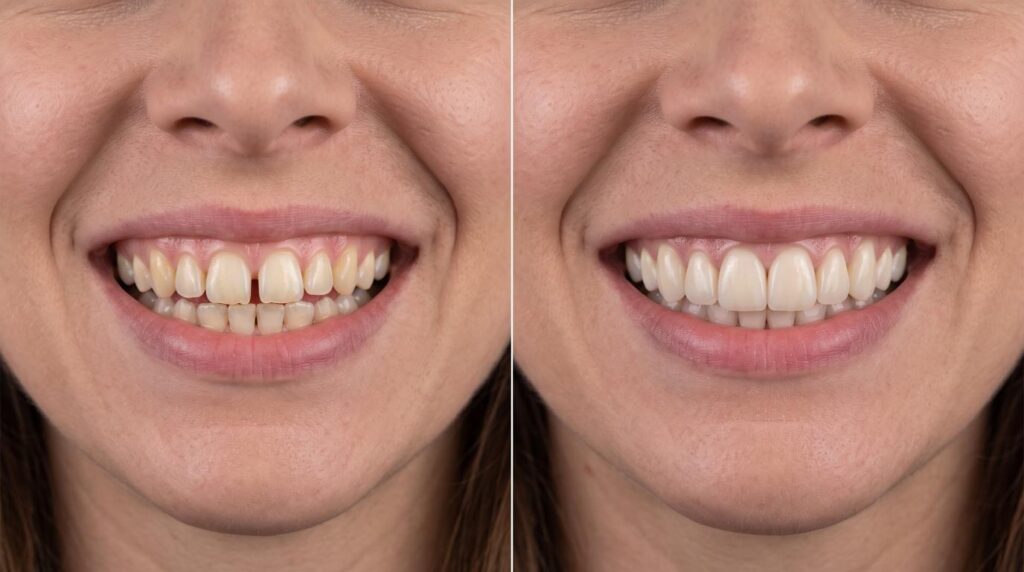
Porcelain veneers before and after results can show clear changes in tooth color, shape, size, spacing, and the overall balance of a smile. Veneers are thin pieces of porcelain placed over the front surfaces of selected teeth to change how those teeth look. At Vista Dorada Dental in Gilbert, AZ, veneer treatment is planned around the condition of your teeth and the changes you want to make. The final result can be different for every person because no two starting smiles are exactly alike. Veneers can improve many cosmetic concerns, but they cannot correct every dental problem. Healthy teeth and gums, careful planning, and realistic expectations are important before treatment begins. Porcelain Veneers Before and After: What Changes? The biggest difference seen in veneer before-and-after photos is usually not one single change. Several small improvements may work together to make the smile appear more even. Veneers can change the visible color, width, length, and shape of selected teeth. They may also help close small spaces or make worn edges appear more even. Research into cosmetic improvement with veneers found that factors such as tooth shape, color, tooth display, gum level, and gum symmetry can all influence how patients view their final smile. What Porcelain Veneers Can Improve Porcelain veneers may be considered for teeth that are: Deeply discolored or difficult to whiten Chipped along the edges Worn or shortened Slightly uneven in size Misshapen Separated by small gaps Different in appearance from nearby teeth Veneers can also be placed on several visible teeth when the goal is to create a more balanced appearance across the smile. The exact change depends on how the teeth look before treatment. Someone with one chipped tooth has very different needs from someone who wants several front teeth changed together. What Porcelain Veneers Cannot Fix Veneers improve the visible surface of a tooth, but they do not solve every oral health problem. They are not designed to treat active tooth decay or gum disease. Teeth with major structural damage may need another type of restoration. Significant bite or alignment problems may also require orthodontic or restorative treatment instead. For this reason, the appearance of the smile should not be the only part of the evaluation. The dentist also needs to look at the condition of the teeth, gums, and bite before recommending treatment. Real Porcelain Veneers Before and After Examples Porcelain veneers before and after photos can show changes in tooth color, shape, size, spacing, and overall smile balance. For example, veneers may help cover deep discoloration, improve the look of chipped or worn teeth, close small gaps, or make uneven teeth appear more consistent. When several veneers are placed together, they can also create a more balanced look across the visible teeth. Before-and-after photos should be used as examples, not as a guarantee of your own results. Look at the condition of the teeth before treatment, how many veneers were placed, and whether other treatments were also completed. Every smile starts differently, so the final result depends on your teeth, gums, smile design, and treatment plan. What Makes Porcelain Veneers Look Natural? Natural-looking veneers are not simply very white teeth. Color, shape, surface details, tooth length, gum position, and the way the veneers fit with nearby teeth all affect the final appearance. Choosing the Right Tooth Color The right veneer color depends on the person’s smile and treatment goals. Some people want a noticeably brighter smile. Others want the veneers to blend with untreated natural teeth. Porcelain can also interact with light in ways that influence its final appearance. This is one reason material selection and shade planning are important rather than choosing color based only on a shade chart. Matching Tooth Shape to Your Smile Tooth shape can have a strong effect on the final result. Front teeth should work together rather than looking like separate pieces. The dentist may consider their width, length, edges, position, and relationship with the lips. Research comparing patient satisfaction after porcelain and composite veneers found that shape, color, size, smile line, tooth display, and surrounding gum appearance can all play a part in cosmetic improvement. Creating Proportion Across the Smile A veneer may look attractive by itself but still appear out of place if its size does not match the neighboring teeth. This becomes especially important when a small gap is being closed or several veneers are being used together. Treatment planning should look at the entire visible smile instead of designing each tooth in isolation. Planning the Veneers Before They Are Made Good planning gives the dentist and patient a chance to discuss the expected result before the final restorations are completed. Photos, scans, impressions, models, or temporary designs may be used depending on the case. The goal is to make decisions about tooth length, shape, position, and shade before the final veneers are bonded. What Happens Before Your Veneers Before and After Results? The final photograph may make veneer treatment look like a simple switch from one smile to another. In reality, several planning steps happen first. Smile Evaluation and Treatment Planning The dentist first examines the teeth, gums, bite, and cosmetic concerns. This step helps determine whether veneers are appropriate and whether another condition needs to be treated first. Discussing Your Desired Smile Patients may have very different ideas about the result they want. Some want a brighter smile. Others are more concerned about chips, uneven tooth lengths, spaces, or tooth shape. Photos of smiles you like may help explain your preferences, but the design still needs to work with your own teeth and face. Preparing the Teeth Some porcelain veneer treatments require removal of a small amount of tooth structure so the restoration can fit properly. The amount of preparation varies by case. Certain carefully selected patients may be candidates for little or no preparation. A clinical study following a specific no-prep porcelain veneer protocol reported good performance over 36 to 60 months, while also stressing the importance of proper patient selection.
Does Delta Dental Cover Implants? What You Need to Know

Does Delta Dental cover implants? It can, but coverage depends on your specific dental plan. Some Delta Dental plans include dental implants as a major service, while other plans may limit or exclude them. Your plan may also treat the implant, crown, bone graft, and other parts of treatment differently. If you are considering dental implants in Gilbert, AZ, Vista Dorada Dental can help you understand the treatment you may need and the costs involved. Before starting treatment, it is important to review your Delta Dental benefits and find out what your individual plan may pay. Having Delta Dental insurance does not automatically mean the full cost of an implant will be covered. Your deductible, annual maximum, waiting period, coinsurance, network status, and plan exclusions can all affect how much you pay. How Delta Dental Coverage for Implants Works Delta Dental offers many different dental plans. The benefits under one plan may be very different from another. This is why two people with Delta Dental may receive different coverage for the same type of dental implant treatment. Delta Dental states that many of its plans cover part of the cost of implants, but implants are not covered by every plan. Delta Dental of Arizona also lists implants as covered major services under some individual plans while other available plans exclude them. What Part of Dental Implant Treatment Does Delta Dental Cover? A dental implant is not always billed as one single treatment. Replacing a missing tooth may involve several procedures that happen at different stages. Your insurance plan may review each service separately. One part may qualify for a benefit while another may have different coverage rules. Dental Implant Placement The dental implant is the small post placed into the jawbone. It acts as a foundation for the replacement tooth. Some Delta Dental plans include implant placement under major services. The percentage paid depends on your specific benefits, and coverage can still be affected by the deductible, annual maximum, waiting period, and other plan terms. Implant Crown The crown is the visible replacement tooth placed above the dental implant. The implant post and implant crown are different parts of treatment. A plan that provides some implant benefits may still calculate coverage for the crown separately. This is one reason patients should ask for an estimate that includes every planned procedure rather than asking only whether “implants” are covered. Bone Grafting Some people do not have enough healthy jawbone to support an implant. In these cases, a dentist may recommend bone grafting before implant placement. Delta Dental also explains that bone grafting may be needed when there is not enough healthy jawbone to support an implant. Insurance coverage for a bone graft depends on the plan and the reason the procedure is needed. It should be checked separately from the implant benefit. What Factors Affect Delta Dental Implant Coverage? Several parts of your dental plan can change how much Delta Dental may pay. Understanding these terms can make your estimated costs much easier to follow. Plan type: Delta Dental offers PPO and other plan types, with benefits selected by you or your employer. Even two PPO plans may have different annual maximums, percentages, waiting periods, or exclusions; the plan name alone doesn’t confirm your implant coverage. Annual maximum: the most your plan will pay toward covered dental services during a benefit year. For example, if your plan has a $1,500 annual maximum and you’ve already used part of it on other treatments, less may remain for an implant. Deductible & coinsurance: a deductible is what you pay before your plan begins covering certain services; coinsurance is the percentage split between you and the plan after that. If a plan pays 50% for a covered major service, that isn’t necessarily 50% of the dentist’s full treatment fee; it’s typically based on the plan’s allowed amount. Waiting periods: some plans require a period of enrollment before certain benefits, including implants, become available. How Much Does Delta Dental Pay for Implants? There is no single amount that Delta Dental pays for every dental implant. The payment depends on your exact plan, the services performed, the plan’s allowed amount, your deductible, your coinsurance, your remaining annual maximum, and other benefit rules. What You May Have to Pay Out of Pocket Your personal cost may include the deductible, your coinsurance, services excluded from coverage, costs above the plan’s benefit allowance, and treatment remaining after your annual maximum has been reached. You may also have costs for related services, such as grafting or restorative work, if those procedures receive different benefits. A Simple Dental Implant Cost Example The following example uses general ranges only. It is meant to show how insurance factors may affect your costs and should not be treated as a Delta Dental quote or guaranteed benefit. Example Item Hypothetical Range Total proposed treatment cost Several thousand dollars Insurance allowed amount May be lower than the total treatment cost Deductible Varies by plan Plan share May cover a percentage of eligible services Remaining annual maximum Depends on benefits already used Estimated insurance payment Limited by plan benefits and annual maximum Patient responsibility Varies based on coverage and treatment needs Even when a plan covers a percentage of implant treatment, that does not mean the same percentage will be paid toward the full dental bill. Deductibles, annual maximums, allowed amounts, exclusions, and other plan rules can change the final amount. Ask for a pre-treatment estimate for a clearer idea of your expected costs. Does Delta Dental PPO Cover Implants? Some Delta Dental PPO plans cover part of the cost of dental implants, but PPO membership by itself does not guarantee implant benefits. Your exact PPO plan may include implants, exclude them, or place them within a major-service category that has its own percentage and limitations. Delta Dental recommends reviewing your individual benefits to see what your plan provides. In-Network vs. Out-of-Network Implant Costs A Delta Dental network includes dentists who participate under agreed plan rules
Are Teeth Whitening Strips Safe? Benefits, Risks, Side Effects & Expert Tips

Teeth whitening strips are generally safe for most adults with healthy teeth and gums when used exactly as directed. Most contain peroxide-based whitening agents that break down stains on natural teeth. The most common side effects are temporary tooth sensitivity and gum irritation, especially when strips are overused or the whitening gel touches the gums. If you are considering whitening strips in Gilbert, AZ, Vista Dorada Dental can help determine whether at-home whitening is appropriate for your teeth. People with cavities, gum disease, significant sensitivity, worn enamel, or existing dental restorations may need a different approach. Schedule a consultation if you are unsure which whitening option is safest for your smile. Whitening strips tend to work best on natural teeth with common yellow or surface staining, but they will not change the color of crowns, veneers, or fillings. In this guide, you will learn whether whitening strips can affect enamel, how often to use them, how to reduce sensitivity, which mistakes to avoid, and when professional whitening may be a better choice. What Are Teeth Whitening Strips? Teeth whitening strips are thin, flexible plastic strips coated with a whitening gel that helps remove stains from the surface of your teeth. They are designed to fit over the front of your teeth and are worn for a specific amount of time, allowing the whitening ingredients to work directly on the enamel. Most whitening strips contain peroxide-based ingredients that gradually break down stains caused by coffee, tea, wine, smoking, and other everyday habits. Because they are easy to use, affordable, and available over the counter, whitening strips have become one of the most popular at-home teeth whitening options for people looking to achieve a brighter smile. Myths vs. Facts About Teeth Whitening Strips Many misconceptions about teeth whitening strips can make it difficult to know what is true. The table below separates common myths from the facts so you can use whitening strips safely and with realistic expectations. Myth Fact Whitening strips ruin your enamel. When used as directed, whitening strips do not damage healthy tooth enamel. Using more whitening strips will whiten your teeth faster. Overusing whitening strips can increase tooth sensitivity without improving your results. Whitening strips work on all types of stains. They work best on surface (extrinsic) stains and are less effective on deep intrinsic stains. Whitening strips can whiten crowns, veneers, and fillings. Whitening strips do not change the color of dental restorations such as crowns, veneers, or fillings. Tooth sensitivity caused by whitening strips is permanent. Any sensitivity is usually mild and temporary, and it often goes away after treatment ends. Everyone can safely use whitening strips. People with cavities, gum disease, worn enamel, or severe sensitivity should consult a dentist before whitening. Benefits of Using Teeth Whitening Strips Whitening strips remain popular for good reason. Here are some of their key benefits: Affordable compared to professional whitening: Whitening strips cost much less than in-office treatments, making them a budget-friendly option for achieving a brighter smile. Easy to use at home: No dental appointment is required. Simply apply the strips as directed while relaxing, working, or doing other daily activities. Noticeable whitening results: With consistent use, many people see visible improvements in the color of their teeth within one to two weeks. Convenient treatment schedule: Most whitening strips only need to be worn for about 20 to 30 minutes a day, making them easy to fit into a busy routine. Possible Risks and Side Effects Whitening strips are low risk, but they are not completely risk free. Knowing what to watch for helps you use them safely. Tooth sensitivity Tooth sensitivity is the most common side effect of whitening strips. The peroxide in the whitening gel can temporarily pass through the enamel and affect the nerves inside the teeth. This may make your teeth more sensitive to hot, cold, or sweet foods and drinks. In most cases, the sensitivity is temporary and improves after stopping the treatment. Gum irritation Whitening strips can cause gum irritation if they do not fit properly or if the whitening gel touches the gum tissue. Some people may experience redness, burning, or a mild stinging sensation around the gums. Using strips that fit well and following the recommended application time can help reduce this risk. Enamel damage from overuse Using whitening strips more often or longer than recommended can increase tooth sensitivity and may irritate your teeth and gums. Always follow the product instructions and avoid excessive whitening. If you are concerned about enamel health, learn more about whether teeth whitening can damage enamel. Uneven whitening Whitening strips may not produce the same results on every tooth. Teeth that are crowded, uneven, or harder to reach may not whiten as effectively as others. This can sometimes create a patchy or uneven appearance after treatment. Existing dental work won’t whiten Whitening strips only work on natural tooth enamel. Dental restorations such as crowns, veneers, bridges, and fillings do not respond to whitening treatments. As your natural teeth become lighter, these restorations may appear a different shade, creating an uneven smile color. Who Can Safely Use Teeth Whitening Strips? Teeth whitening strips are generally a good option for adults with healthy teeth and gums who want to reduce common surface stains. They tend to work best on natural teeth with yellow or mild discoloration caused by coffee, tea, red wine, smoking, and other everyday staining habits. You should speak with a dentist before using whitening strips if you have cavities, gum disease, worn enamel, severe tooth sensitivity, or unusual discoloration. Whitening strips also do not change the color of crowns, veneers, bridges, or fillings, so people with visible dental restorations may need another whitening approach for more even results. How to Use Teeth Whitening Strips Safely Teeth whitening strips are generally safe when you follow the product instructions carefully. Apply the strips only for the recommended amount of time, avoid using them more often than directed, and make sure the whitening gel
How to Keep Teeth White: 15 Simple Tips That Actually Work

Keep your teeth white by brushing twice a day with fluoride toothpaste and flossing every day. Rinse your mouth with water after drinking coffee, tea, or other dark-colored beverages. Teeth naturally lose their bright white color over time because of the foods we eat, the drinks we sip, and simply wear on the enamel as we age. The good news is that a few consistent daily habits can protect your smile and keep stains from building up. Visit your dentist every six months for a professional cleaning to remove plaque and tartar before they cause stains. This guide walks through 15 proven ways to keep your teeth white, the foods that help or hurt your smile, and when it might be time to see a dentist. If you live near Gilbert, AZ and want a brighter smile without guesswork, Vista Dorada Dental is here to help you get there. Why Do Teeth Lose Their Natural Whiteness? Teeth can lose their bright color for a few different reasons, and knowing the cause helps you pick the right fix. Stains come in two main types. Extrinsic stains sit on the outer surface of the tooth and come from things like coffee, tea, and tobacco. Intrinsic stains form inside the tooth itself and are often caused by things like certain medications, too much fluoride at a young age, or an injury to the tooth. Common causes of yellow teeth include drinking dark beverages regularly, smoking or using tobacco, not brushing or flossing enough, and eating a lot of sugary or acidic foods. Natural aging also plays a role. As we get older, the outer enamel layer wears down slightly, which lets the yellower layer underneath, called dentin, show through more easily. 15 Proven Ways to Keep Your Teeth White Keeping your teeth white is easier when you follow simple daily habits consistently. These proven tips help prevent stains, protect enamel, and keep your smile looking brighter for longer. Brush Your Teeth Twice a Day Brushing twice daily removes the plaque and food particles that lead to stains and buildup. Use a soft-bristled brush and fluoride toothpaste, and aim for two full minutes each time. Brushing at a slight angle toward the gumline helps clean the areas where stains tend to build up most. Floss Every Day Flossing removes food and plaque from between teeth, where a toothbrush cannot reach. Skipping this step allows stains and bacteria to build up in spots you cannot see. Over time, this hidden buildup can harden into tartar, which is much harder to remove without a professional cleaning. Use a Fluoride Whitening Toothpaste A toothpaste with both fluoride and gentle whitening ingredients can help remove surface stains over time while still protecting your enamel. Look for one with a seal of approval from a dental association, since this means it has been tested for both safety and effectiveness. Rinse Your Mouth or Drink Water After Meals Swishing water around your mouth after eating or drinking helps wash away food particles and staining pigments before they have a chance to settle on your teeth. This simple habit takes only a few seconds but can noticeably reduce staining over weeks and months. Limit Coffee, Tea, Red Wine, and Dark-Colored Drinks These drinks are some of the biggest causes of surface stains. You do not have to give them up completely, but limiting how often you drink them makes a real difference. Sipping slowly over a long period actually increases staining, so finishing a drink in one sitting is gentler on your teeth. Avoid Tobacco Products Smoking and other tobacco products cause some of the deepest and most stubborn stains on teeth. Avoiding tobacco protects both your smile and your overall health. These stains often sit below the enamel surface, which is why they are so difficult to whiten with regular brushing alone. Eat Crunchy Fruits and Vegetables Foods like apples and carrots naturally scrub the surface of your teeth as you chew, helping to remove surface stains and plaque throughout the day. They also encourage saliva production, which helps rinse your mouth naturally between brushings. Reduce Sugary and Acidic Foods Sugar feeds the bacteria that damage enamel, and acidic foods can wear down the enamel directly. Both of these make your teeth more likely to look dull and stained. Weakened enamel also allows stains to soak in more easily, making this habit important for both whiteness and long-term tooth health. Use a Straw for Staining Beverages Drinking dark or acidic beverages through a straw helps the liquid bypass your front teeth, reducing the amount of contact time with the surface that stains most easily. This small change is especially helpful for people who drink coffee, tea, or soda regularly throughout the day. Don’t Skip Regular Dental Cleanings Professional cleanings remove tartar and surface stains that brushing alone cannot fully clear. Most people benefit from a cleaning every six months. These visits also give your dentist a chance to catch early staining or enamel issues before they become harder to treat. Consider Whitening Treatments Safely Professional whitening treatments, done through your dentist, are a safe and effective way to lighten stains that daily habits cannot fully remove. Ask your dentist which option fits your needs and your enamel health. Professional supervision helps avoid the sensitivity and enamel damage that can come from overusing store-bought kits. Protect Your Tooth Enamel Enamel is your tooth’s natural defense against stains and damage. Avoid chewing on hard objects, limit acidic foods, and use a soft-bristled toothbrush to keep your enamel intact. Once enamel wears away, it does not grow back, so protecting it early makes a lasting difference. Maintain Good Daily Oral Hygiene Consistency matters more than any single product. Brushing, flossing, and rinsing every day, without skipping, keeps your smile brighter for longer. Small daily habits done consistently tend to outperform occasional intense efforts, like a deep clean once a month. Treat Dry Mouth if Needed Saliva helps wash away staining particles and
Should I Choose Whitening or Veneers for a Brighter Smile?
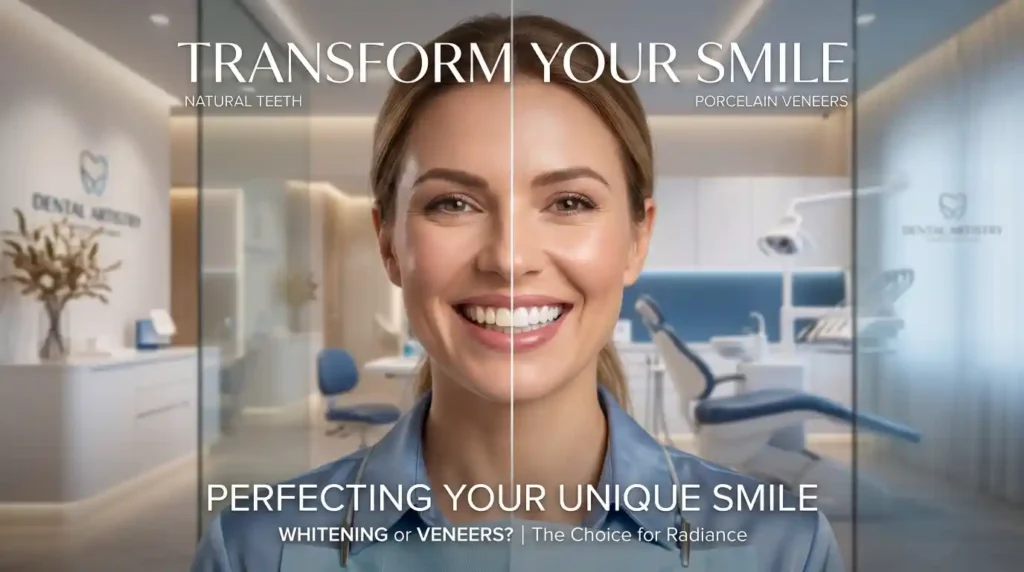
A bright, confident smile can change the way you feel about yourself. But when it comes to getting that smile, many people get stuck on one big question: should they go with whitening or veneers? Both options can make your teeth look better. But they work in very different ways. Choosing the wrong one can leave you disappointed or even cost you more money in the long run. Teeth whitening works best if your teeth are healthy and you like their shape. Veneers may be a better option if you want to fix deep stains, chips, gaps, or uneven teeth at the same time. The good news is that you do not need to be a dentist to understand the difference. In this guide, we will break everything down in simple terms. By the end, you will know exactly which option matches your smile goals and your budget. Whether you are in Gilbert AZ, looking for a quick smile refresh or a complete transformation, the right treatment starts with understanding your options. Understanding the Difference Between Teeth Whitening and Veneers Both treatments can brighten your smile, but they work in very different ways and are not meant for the same problems. What Is Teeth Whitening? Teeth whitening is a cosmetic treatment that removes stains and discoloration from the surface of your teeth. It uses a bleaching agent, usually hydrogen peroxide or carbamide peroxide, to lighten the color of your natural teeth. You can get this done at a dental office, or you can use at-home whitening kits that your dentist provides. Whitening does not change the shape or structure of your teeth. It simply lifts surface stains and brightens the natural shade. Results can last anywhere from a few months to a couple of years, depending on your diet and habits. What Are Dental Veneers? Dental veneers are thin shells that are bonded to the front of your teeth. They are usually made from porcelain or composite resin. Veneers cover the entire visible surface of the tooth, which means they can change both the color and the shape of your smile. Getting veneers is a more involved process. Your dentist will remove a small amount of enamel from your teeth so the veneers fit properly. Once placed, they are permanent and cannot be removed without replacing them with new veneers or other restorations. Teeth Whitening vs. Veneers: Side-by-Side Comparison When people compare whitening or veneers, they often focus only on cost or results. But there are many other factors that matter just as much. Understanding how these two treatments differ in every way helps you make a smarter decision before sitting in the dentist’s chair. Purpose and Results Whitening brightens the natural color of your existing teeth. It does not change anything about their shape or structure. Veneers go further by transforming the entire look of your smile. They can change color, shape, length, and spacing all at once. Types of Stains They Can Treat Whitening only works on stains that sit on the outside of the tooth, like those from coffee, tea, wine, or tobacco. Veneers are a better option for stains that sit deep inside the tooth, such as those caused by medication or injury, because they cover the tooth completely rather than trying to bleach it. Appearance and Natural Look Both treatments can give you a very natural-looking smile. Whitening keeps everything subtle because your real teeth stay intact. Porcelain veneers reflect light the same way natural enamel does, which makes them look realistic and beautiful at the same time. Longevity and Durability Whitening results fade over time depending on your diet and habits. Veneers hold their appearance for many years and do not stain the way natural teeth do, which makes them a more stable long-term option. Cost Whitening is the more budget-friendly choice with a lower upfront cost. Veneers require a bigger investment, especially when covering multiple teeth, but their long lifespan can make them worth the expense over time. Procedure Time Whitening is done in a single short visit. Veneers take longer because your dentist needs to prepare your teeth, send impressions to a lab, and then bond the finished veneers in a separate appointment. Reversibility This is one of the biggest differences between the two. Whitening is completely reversible and does not alter your teeth at all. Veneers require removing a thin layer of enamel, which means the change is permanent and your teeth will always need some form of coverage going forward. When Is Teeth Whitening the Better Choice? Teeth whitening is the better choice when your teeth are healthy and your stains are mild to moderate. If your discoloration comes from coffee, tea, wine, or tobacco, whitening can clear that up quickly and affordably. It works best for people who have good tooth structure and just want a brighter, fresher version of their natural smile. It is also the smarter pick if you are working with a limited budget or want fast results without multiple dental visits. A single in-office session can make a noticeable difference. If your teeth and gums are in good condition and color is your only concern, whitening gives you everything you need without overcomplicating things. When Are Teeth Veneers the Better Option? Veneers are the better option when whitening simply cannot fix the problem. If your stains are deep, caused by medication, injury, or fluorosis, bleaching agents will not reach them. Veneers cover all of that completely. If you have chipped, cracked, uneven, or gapped teeth, veneers fix everything at once and give you a fully transformed smile. Porcelain veneers can last well over a decade with proper care, making them a one-time solution for multiple smile concerns. If you want a complete smile makeover that holds up for years, veneers deliver results that whitening alone never could. What Whitening Can and Cannot Fix Surface stains build up on the outer layer of the tooth, called the enamel. These come from food, drinks, and tobacco.
Can You Go to Emergency for Dental Pain? When to Visit the ER and When to See a Dentist
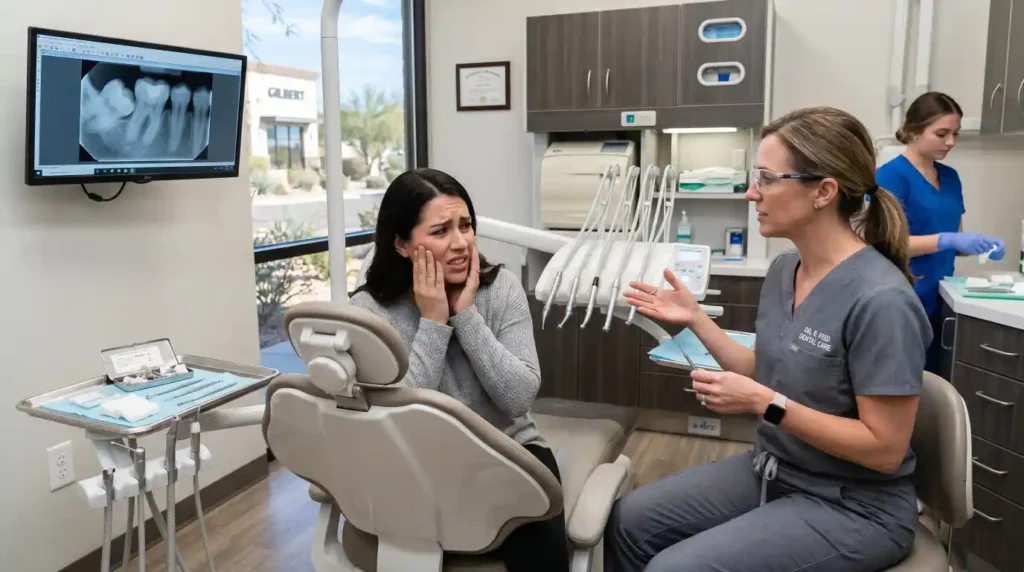
A dental emergency needs immediate care. Problems with your teeth or gums can quickly become more serious and may lead to more damage if they are not treated. If you have a dental emergency, contact your dentist right away or go to the emergency room if the situation is severe. You should go to the ER if you have severe pain along with swelling, fever, heavy bleeding, trouble breathing, trouble swallowing, or a serious injury to your mouth or face. If you are in Gilbert, AZ or the surrounding Mesa area, we offer same-day emergency dental appointments so you can get real treatment fast, not just temporary relief. Should You Go to the Emergency Room for Dental Pain? The emergency room is the right choice when your dental problem has moved beyond just tooth pain and become a medical emergency. This includes severe swelling, breathing or swallowing problems, high fever, spreading infection, or serious facial injury. For most dental problems, even painful ones, an emergency dentist is a better choice than the ER. Dentists have the tools, training, and equipment to actually fix dental problems. The ER can manage your symptoms, but they cannot pull a tooth, do a root canal, or place a crown. What Is Considered a Dental Emergency? A dental emergency is any problem with your teeth, gums, or mouth that needs immediate treatment to relieve severe pain, stop bleeding, or prevent infection from getting worse. It is usually something that cannot wait for a regular dental appointment. Common dental emergencies include strong tooth pain that does not go away, swelling in the face or gums, and a knocked-out or broken tooth. They also include signs of infection such as pus, fever, or a bad taste in the mouth. Uncontrolled bleeding in the mouth after an injury or dental procedure is also considered an emergency. These conditions are urgent because they can quickly become more serious and may lead to permanent damage or spread of infection if not treated on time. Can You Go to the Emergency Room for Dental Pain? Yes, you can go to the emergency room for dental pain, especially if the pain is severe or comes with swelling, fever, or signs of infection. The ER doctors cannot usually fix the dental problem, like doing fillings or removing a tooth, but they can help by giving pain relief, antibiotics, and treating any serious infection. After that, you will still need to visit a dentist as soon as possible to treat the real cause of the problem. When Should You Go to the ER for Tooth Pain? It can stabilize you when things get dangerous, but it is not meant to solve dental problems. Go to the ER for tooth pain when the situation has escalated beyond the tooth itself. Severe Facial Swelling Swelling that has moved from the tooth to the jaw, cheek, neck, or eye area needs emergency care. This level of swelling often means the infection has moved into the soft tissues and could block your airway. Signs of a Spreading Infection Warning signs that a dental infection is spreading include a high fever, swelling that keeps growing, red streaks around the swollen area, feeling very sick or weak, difficulty opening your mouth (a condition called trismus), or a stiff neck. These are serious symptoms that go beyond a normal toothache. High Fever With Dental Pain A fever usually means your body is fighting an infection. When you have a tooth infection and a fever above 101°F, it is a sign the infection may be spreading. Combined with other symptoms, this is a reason to go to the ER. Trouble Breathing or Swallowing If swelling from a dental infection is making it hard to breathe or swallow, that is a medical emergency. The infection can spread to your neck and throat in a condition called Ludwig’s Angina, which can close off your airway. Serious Facial Trauma Car accidents, sports injuries, and falls can cause serious damage to the teeth, jaw, and face. If you have been hit hard in the face and you have significant pain, bleeding, or swelling, go to the ER first to rule out fractures or other injuries before seeing a dentist. Emergency Dentist vs Emergency Room Emergency Dentist Emergency Room (ER) Treats the actual cause of dental problems Focuses on relieving pain and urgent symptoms Can perform dental procedures like fillings, extractions, and root canals Cannot perform dental treatments like fillings or extractions Provides long-term solution Provides temporary relief only Best for tooth pain, broken teeth, abscess, or dental infections Best for severe swelling, fever, trauma, or when no dentist is available Helps restore dental health Stabilizes condition until you see a dentist What Can the Emergency Room Do for Dental Pain? The emergency room can help with dental pain by providing temporary relief, not full dental treatment. ER doctors can give you pain medication to reduce severe toothache and may prescribe antibiotics if there is an infection or swelling. They can also check for serious problems like spreading infection or complications that could affect your overall health. In some cases, they may treat uncontrolled bleeding or help stabilize a dental injury. However, the emergency room cannot perform dental procedures such as fillings or tooth extractions, so you will still need to see a dentist as soon as possible for proper treatment. What the Emergency Room Cannot Do The emergency room cannot provide full dental treatment. It does not have the tools or dental specialists needed to fix the actual cause of most tooth problems. ER doctors cannot perform procedures like fillings, root canals, tooth extractions, or repair broken teeth. They also cannot provide long-term dental care or permanent solutions for cavities, infections, or damaged teeth. Instead, the ER only offers temporary relief, such as pain medicine or antibiotics, and then refers you to a dentist for proper treatment. Common Dental Problems and Where to Go for Treatment This section explains common dental problems and helps
Is Fluoride Treatment for Kids Safe? Benefits, Risks, and What Parents Should Know

Healthy teeth and gums are important for your child’s overall health, so good dental habits should start early. Fluoride is a natural mineral that helps strengthen teeth and Fluoride is one of the most well-researched substances in modern dentistry and organisation like the American Academy of Pediatrics’s and the American Dental Association consider it safe and effective when used correctly. Although some parents have concerns about fluoride, research continues to show that professional fluoride treatments are a reliable way to support long-term oral health in children. Families across Gilbert, Arizona and the surrounding areas trust fluoride varnish as a safe and proven part of their child’s dental care routine. What Is Fluoride? Fluoride is a naturally occurring mineral found in soil, water, and many foods. It strengthens tooth enamel and makes it more resistant to decay. When bacteria break down sugar in the mouth, they produce acid that slowly wears away enamel. Fluoride helps the enamel rebuild itself through a process called remineralization, making teeth harder and better protected against future acid attacks. Fluoride reaches children through a few different sources. It is present in most community tap water at low, regulated levels, used as an active ingredient in children’s toothpastes, and applied directly to teeth in a concentrated form during a professional dental visit. What Is Fluoride Treatment for Kids? Fluoride treatment at the dentist is different from using fluoride toothpaste at home. Professional fluoride treatment involves applying a much higher concentration of fluoride directly to the teeth in a controlled, safe way. The most common form used for children is fluoride varnish, a sticky coating painted onto the teeth using a small brush. Fluoride varnish sticks to the teeth and releases fluoride slowly over several hours, giving the enamel time to absorb it fully. It is not the same as swallowing fluoride or taking a supplement. The amount applied is small, the contact time is controlled, and the treatment is done by a trained dental professional who knows exactly how much to use based on the child’s age and risk level. How Does Fluoride Help Children’s Teeth? Fluoride helps protect children’s teeth by strengthening enamel, preventing cavities, and reducing the risk of early tooth decay. Strengthens Tooth Enamel Enamel is the hardest substance in the human body, but it is not indestructible. Every day it faces acid from food, drink, and bacteria. Fluoride binds to the enamel and actually changes its structure slightly, making it more resistant to the acids that cause cavities. Children who receive regular fluoride treatments develop stronger enamel over time, which serves them well into adulthood. Protects Baby Teeth and Permanent Teeth Some parents wonder why it matters to protect baby teeth at all since they fall out anyway. Baby teeth are important for chewing, speaking clearly, and holding space in the jaw for permanent teeth. When baby teeth decay and are lost too early, it can cause permanent teeth to come in crooked or crowded. Protecting them with fluoride is an investment in how the permanent teeth develop. Is Fluoride Treatment Safe for Kids? The American Academy of Pediatrics, the American Dental Association, and the American Academy of Pediatric Dentistry all support fluoride varnish as safe and beneficial for children, even from the time the first tooth appears. Most concerns about fluoride safety are related to fluoride supplements or very high levels of fluoride in drinking water, which are different from professional fluoride treatments used in dental offices. A trained dentist or hygienist uses the correct amount based on the child’s age and gives proper aftercare instructions, making professional fluoride treatment safe and controlled. Are There Any Side Effects of Fluoride? Side effects from professional fluoride varnish are rare and mild. Some children may notice a temporary change in taste or slight gum irritation after treatment, but these effects go away quickly. Most children tolerate it without any issue at all. The main concern with fluoride is dental fluorosis, a cosmetic condition that appears as faint white spots on teeth when children swallow too much fluoride during tooth development. It does not cause pain or affect function. It is most commonly caused by swallowing toothpaste, not professional treatments. Using the right amount of toothpaste for your child’s age and supervising brushing until around age eight is the simplest way to prevent it. When Do Kids Need Fluoride Treatments? The American Academy of Pediatric Dentistry recommends that children begin receiving fluoride varnish treatments as soon as their first tooth appears, which is typically around six months of age. For most children, fluoride treatments are recommended every six months, usually at the same time as a regular dental checkup and cleaning. Some children may need treatments more frequently if they are at higher risk for cavities. Higher risk factors include a diet high in sugar, living in an area without fluoridated water, having had cavities before, wearing braces, or having medical conditions that affect saliva production. Your child’s dentist will assess their individual risk level and recommend the right schedule accordingly. How Fluoride Treatments Work Fluoride treatments work by coating the teeth with fluoride to strengthen enamel, protect against cavities, and help repair early tooth damage. Fluoride Varnish Application Fluoride varnish is the most widely used form of professional fluoride treatment for children. It is a thick, sticky liquid that is painted directly onto the surfaces of the teeth using a small brush. It sets quickly on contact with saliva, which means there is very little risk of the child swallowing it during the process. What Happens During the Appointment The treatment is simple and takes only a few minutes. The dentist or hygienist dries the teeth, applies the varnish to all tooth surfaces, and that is essentially it. There is no drilling, no needles, and nothing uncomfortable about the process. Most children handle it easily, and many barely notice it happening. How Long the Treatment Takes The actual application takes about one to three minutes. The varnish stays on the teeth for several