
What Is Teeth Bonding? Complete Guide to Cosmetic Dental Bonding
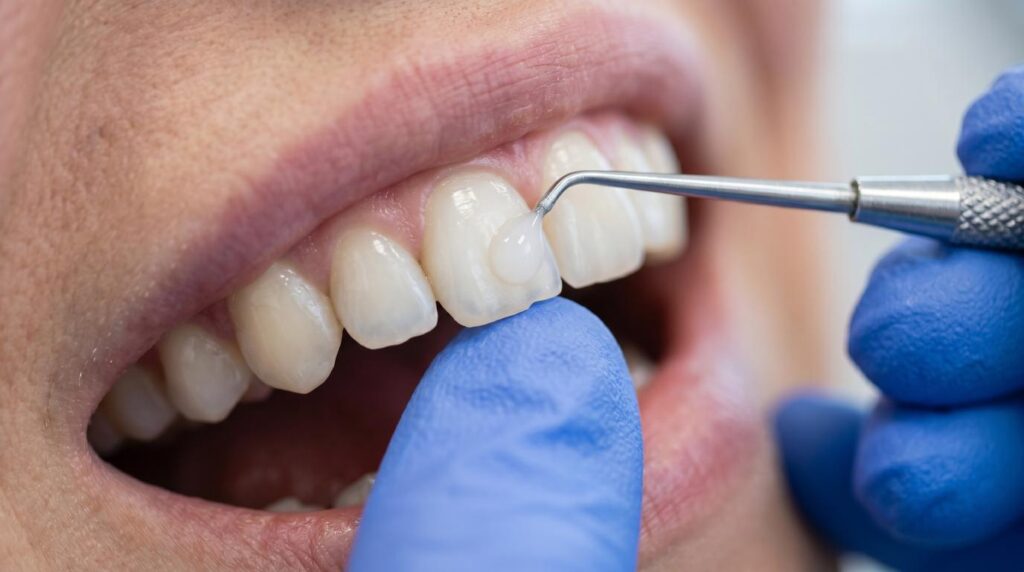
A chipped tooth, small gap, or uneven tooth edge does not always require veneers or a crown. What is tooth bonding? It is a cosmetic dental treatment that uses tooth-colored composite resin to repair minor damage, close small spaces, and improve the shape of teeth. The dentist applies and shapes the resin directly on the tooth, then hardens it with a special light. Most simple bonding procedures can be completed in a single appointment. At Vista Dorada Dental in Gilbert, AZ, our team helps patients understand whether dental bonding is suitable for their needs. The right treatment depends on the condition of the tooth, the extent of the damage, and the results you want to achieve. What Is Teeth Bonding? Teeth bonding is a cosmetic dental procedure that uses tooth-colored composite resin to repair or reshape teeth. The material is applied to the tooth surface, hardened with a curing light, and polished to blend with the surrounding enamel. Dental bonding is commonly used to repair small chips, close minor gaps, and improve uneven tooth edges. It generally requires little or no removal of healthy enamel, making it a conservative option for selected cosmetic repairs. However, teeth with extensive damage or insufficient healthy structure may need a different restoration, such as a porcelain veneer or crown. How Does Teeth Bonding Work? Teeth bonding works by attaching tooth-colored composite resin to the tooth and shaping it to repair damage or improve appearance. The procedure often takes approximately 30 to 60 minutes per tooth, although treatment time depends on the amount of work needed. The procedure generally involves five steps: Choose the resin shade: The dentist selects a color that closely matches the surrounding teeth. Prepare the tooth: The surface is cleaned and conditioned to help the resin bond securely. Apply the composite resin: The material is placed on the tooth and shaped to achieve the desired appearance. Harden the material: A special curing light hardens the composite resin. Polish and adjust: The dentist checks the bite and polishes the restoration for a smooth finish. Most simple cosmetic bonding procedures do not require numbing. However, treatment involving decay or deeper damage may require local anesthesia. What Problems Can Teeth Bonding Fix? Teeth bonding can improve several minor cosmetic concerns without requiring extensive changes to natural teeth. Dentists use tooth-colored composite resin to repair damaged areas, adjust tooth shape, and create a more even appearance. Common problems dental bonding can address include: Chipped or slightly cracked teeth: Repairs small areas of damage and helps restore the tooth’s original shape. Small gaps between teeth: Adds composite resin to reduce or close spaces between certain teeth. Uneven or worn tooth edges: Reshapes teeth that appear shorter or less even than neighboring teeth. Tooth discoloration: Covers selected stains or discolored areas that may not respond well to whitening. Irregularly shaped teeth: Adjusts the appearance of teeth that look slightly too small or uneven. Bonding may also improve the appearance of mildly crooked teeth, but it does not physically straighten them. Read more about whether composite bonding can fix crooked teeth. Dental bonding is generally most effective for smaller repairs. Teeth with extensive decay, large fractures, or significant alignment problems may need another treatment. Who Is a Good Candidate for Teeth Bonding? Teeth bonding may be a suitable option for patients who have enough healthy tooth structure to support the composite resin. The treatment is often considered when only a small cosmetic or restorative change is needed. Before recommending bonding, a dentist will examine the teeth and gums, check the bite, and look for conditions that could affect the restoration. Untreated cavities, gum disease, or frequent teeth grinding may need to be addressed before cosmetic bonding. Patients with heavily damaged teeth or large fractures may need a stronger restoration, such as a dental crown. Bonding may also be less suitable when significant changes to tooth alignment are required. A dental examination helps determine whether bonding can provide a natural-looking result that is appropriate for the tooth’s long-term health. Can Teeth Bonding Work on Front and Back Teeth? Yes, composite resin can be used on both front and back teeth, but the type of repair and the amount of biting pressure affect whether it is suitable. Front teeth are commonly bonded to repair small chips, close minor gaps, and improve uneven edges. Back teeth may also be restored with composite resin, often as tooth-colored fillings for cavities or minor damage. Because molars handle stronger chewing forces, larger restorations may need a different treatment. A dentist can examine the tooth and recommend an option based on its condition, location, and the extent of the damage. Teeth Bonding vs Veneers Teeth bonding and porcelain veneers can both improve the appearance of teeth, but they differ in materials, preparation, durability, and cost. Bonding uses composite resin applied directly to a tooth, while porcelain veneers are custom-made shells that cover the front surface. Feature Teeth Bonding Porcelain Veneers Material Composite resin Dental porcelain Common uses Small chips, gaps, and uneven edges More extensive cosmetic changes Treatment time Often one appointment Usually multiple appointments Enamel removal Usually little or none Generally requires enamel removal Durability May need repairs over time Generally more resistant to stains and wear Cost Usually less expensive Usually more expensive Bonding may be appropriate for a small repair when most of the natural tooth remains healthy. Veneers may be considered for broader cosmetic changes. The choice depends on tooth condition, appearance goals, and long-term maintenance needs. Teeth Bonding vs Crowns Teeth bonding repairs or reshapes a limited part of a tooth, while a dental crown covers the visible tooth above the gumline. Bonding may be suitable for a small chip or minor cosmetic change when the tooth remains strong. A crown may be recommended when a tooth has extensive decay, a large fracture, or too little healthy structure to support a smaller restoration. Crowns generally require more tooth preparation but provide broader coverage. The choice depends on the condition
How to Protect Your Teeth From Grinding

To protect your teeth from grinding, a properly fitted night guard can help reduce tooth wear and damage during sleep. Managing stress, recognizing daytime clenching, and addressing related health concerns may also help. However, a night guard protects your teeth without necessarily stopping the grinding itself. At Vista Dorada Dental in Gilbert, AZ, our team helps patients identify signs of teeth grinding and understand their treatment options. Whether you experience morning jaw pain, tooth sensitivity, or worn enamel, this guide explains the causes, warning signs, and practical ways to protect your teeth from further damage. What Is Teeth Grinding (Bruxism)? Teeth grinding, also called bruxism, occurs when a person repeatedly clenches, grinds, or presses their teeth together. It can happen while awake or during sleep, sometimes without the person realizing it. Awake bruxism often involves clenching during concentration or stress, while sleep bruxism involves involuntary jaw muscle activity during sleep. Frequent or severe grinding may contribute to tooth wear, jaw discomfort, and damage to dental restorations. However, mild cases do not always require treatment. Daytime vs. Nighttime Bruxism Daytime bruxism usually involves clenching or holding the jaw muscles tense while working, concentrating, or experiencing stress. Because it happens while awake, some people can learn to recognize the habit and relax their jaw when they notice tension. Nighttime bruxism occurs during sleep and may involve grinding or clenching without conscious awareness. A sleeping partner may hear grinding sounds, while other people notice morning jaw soreness or headaches. Both types can affect the teeth and jaw, but their management approaches may differ. How to Stop Clenching Your Teeth During the Day Daytime teeth clenching often happens without you noticing, especially while working, driving, or concentrating. Unlike nighttime grinding, awake clenching may be easier to manage by recognizing the habit and changing your resting jaw position. These simple steps can help reduce daytime clenching: Keep your teeth slightly apart: When your jaw is relaxed, your upper and lower teeth should not remain pressed together. Check your jaw position throughout the day. Set regular reminders: Use phone notifications or sticky notes to remind yourself to relax your jaw and avoid unnecessary clenching. Manage daily stress: Take short breaks, practice slow breathing, or try relaxing activities when you notice tension building. Avoid unnecessary jaw strain: Limit habits such as chewing pens, biting nails, or repeatedly chewing gum, especially if your jaw feels sore. Pay attention to symptoms: If you frequently experience jaw tightness, headaches, or tooth sensitivity, discuss these concerns with the dental team. According to the National Institute of Dental and Craniofacial Research, increasing awareness of jaw position and using reminders to keep teeth apart may help reduce awake bruxism. These habits can support better jaw comfort, although persistent clenching may require professional evaluation. Why Teeth Grinding Happens Teeth grinding does not always have one identifiable cause. Research suggests that stress, lifestyle habits, certain medications, and sleep-related factors may contribute to bruxism. Understanding these factors can help determine which management strategies may be appropriate. Stress and Anxiety: Emotional stress and increased tension are commonly associated with bruxism, especially daytime jaw clenching. Some people notice they press their teeth together when concentrating or feeling anxious. Sleep Disorders and Sleep Apnea: Sleep bruxism and obstructive sleep apnea can occur together, but one does not necessarily cause the other. Loud snoring, breathing interruptions during sleep, or persistent daytime sleepiness may indicate a need for a sleep evaluation. Lifestyle Habits: Caffeine, alcohol, and tobacco use have been associated with teeth grinding. These habits can also affect sleep and overall health, making them important to discuss during an evaluation. Medications and Medical Conditions: Certain medications, including some used for depression or attention deficit hyperactivity disorder, may be associated with bruxism. Patients who notice grinding after a medication change should consult their prescribing healthcare professional rather than stopping medication independently. Family History and Other Risk Factors: Bruxism can occur in several members of the same family, suggesting that genetics may contribute. Age, stress levels, and other individual factors can also influence the likelihood of grinding. Identifying possible contributing factors may help guide treatment, although the exact cause of teeth grinding is not always clear. Why Teeth Grinding Is Harmful Grinding puts far more pressure on your teeth than normal chewing, and over time this pressure adds up to real damage. The repeated force from grinding can crack fillings, crowns, and even natural teeth, sometimes without any pain until the damage has already progressed. Constant grinding puts stress on the jaw joint, which can lead to TMJ disorders, clicking or popping sounds, and ongoing discomfort when chewing or talking. Left untreated, grinding can lead to worn down enamel, gum recession, and a higher risk of tooth decay, since damaged enamel no longer protects teeth as well as it should. Signs and Symptoms of Teeth Grinding Teeth grinding can happen while you are awake or asleep, and some people do not recognize the habit until symptoms develop. Common warning signs include changes in the teeth, jaw discomfort, and recurring headaches. Tooth Pain and Sensitivity: Frequent grinding may wear down enamel and expose sensitive tooth structures. This can cause discomfort when eating hot, cold, or sweet foods. Jaw Pain and Muscle Tightness: Waking up with a sore, tired, or stiff jaw may indicate nighttime clenching or grinding. Some people also notice discomfort when chewing. Headaches and Facial Pain: Repeated jaw muscle activity may contribute to headaches around the temples or soreness in the face. These symptoms can have other causes, so a dental examination may be needed. Worn, Chipped, or Cracked Teeth: Flattened chewing surfaces, chipped enamel, or damaged restorations may be signs of grinding. However, tooth wear alone cannot confirm that grinding is currently happening. Grinding Sounds During Sleep: A sleeping partner may hear clicking or grinding sounds at night, even when the person grinding their teeth remains unaware of the habit. Recognizing these signs can help you decide when to seek an evaluation. Persistent jaw pain, tooth sensitivity, or visible
Does Teeth Whitening Damage Enamel?
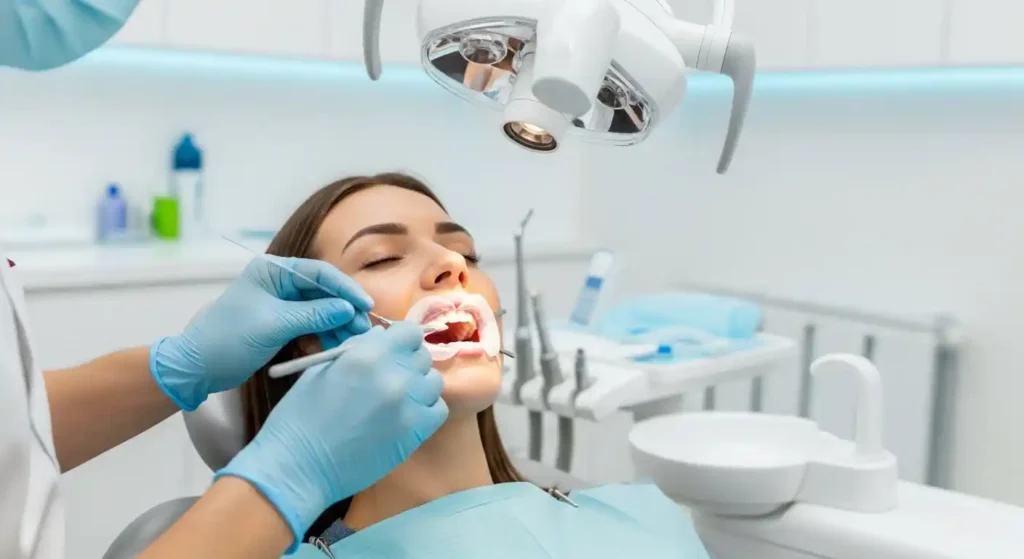
Teeth whitening does not damage enamel in most cases when appropriate peroxide-based products are used according to instructions. However, whitening is not completely free from risks. Some treatments can cause temporary tooth sensitivity, gum irritation, or small changes to enamel surface properties, especially when products are misused. At Vista Dorada Dental in Gilbert, AZ, our team helps patients understand how teeth whitening works and which options may be suitable for their oral health. This guide explains the effects of whitening on enamel, possible side effects, safety precautions, and when to consult a dentist before treatment. How Teeth Whitening Works Most peroxide-based teeth whitening treatments use hydrogen peroxide or carbamide peroxide to break down stain-causing compounds within teeth. These ingredients penetrate the enamel and react with molecules responsible for discoloration, making teeth appear lighter. Tooth stains are generally classified as extrinsic or intrinsic. Extrinsic stains develop on the tooth surface from substances such as coffee, tea, and tobacco. Intrinsic discoloration occurs within the tooth and may require a different whitening approach. Peroxide whitening works through a chemical reaction rather than mechanically removing enamel. However, the effects on teeth depend on the whitening product, its concentration, and how it is used. Types of Teeth Whitening Treatments Teeth whitening treatments come in several forms, each offering different levels of strength, speed, and professional supervision. Understanding these options can help you choose the safest and most effective method for achieving a brighter smile. Professional In-Office Whitening Professional whitening performed by a licensed dentist is considered the gold standard. Dentists use high-concentration peroxide gels sometimes activated with a special light to significantly brighten teeth in a single session that usually lasts about an hour. Because the procedure is supervised, the dentist protects the gums and monitors the process to reduce risks. At-Home Whitening Kits Over-the-counter whitening products such as strips, gels, and trays are popular because they are affordable and convenient. These products contain lower concentrations of peroxide, so results appear more gradually. However, incorrect use or overuse can lead to temporary tooth sensitivity or gum irritation. Natural or DIY Whitening Methods Many social media trends promote “natural” whitening methods such as baking soda, activated charcoal, oil pulling, or lemon-based mixtures. While these options may seem appealing, most are either ineffective or potentially harmful. Abrasive substances and acidic ingredients can gradually wear down enamel and are not a reliable substitute for proven whitening treatments. Professional In-Office Whitening Professional in-office whitening uses dentist-supervised bleaching products to lighten tooth discoloration. These treatments typically contain peroxide-based agents and may produce visible results in one appointment, although some patients need additional sessions. Before treatment, the dentist examines the teeth and gums to determine whether whitening is appropriate. Protective measures may be used to limit contact between the whitening gel and soft tissues. Treatment results and sensitivity vary depending on the type of discoloration, product used, and individual oral health. Effects of Whitening on Tooth Enamel Teeth whitening is generally considered safe for enamel when appropriate products are used as directed, but some whitening treatments can produce small changes to enamel surface properties. The effects depend on the product formulation, peroxide concentration, exposure time, and condition of the teeth. A 2026 systematic review and meta-analysis on enamel damage from tooth whitening found small changes in enamel microhardness in laboratory studies. However, the researchers found no clear evidence that these changes represented clinically meaningful damage under recommended whitening protocols. Temporary tooth sensitivity and gum irritation are more commonly reported side effects. These symptoms do not automatically mean that enamel has been permanently damaged. Patients concerned about enamel health should avoid excessive whitening and discuss suitable products with a dentist before beginning treatment. Tooth Sensitivity vs Enamel Damage After Whitening Tooth sensitivity after whitening is usually temporary and does not automatically mean the enamel has been damaged. Enamel damage involves changes to tooth structure, while whitening sensitivity often occurs as a short-term reaction to bleaching agents. Feature Tooth Sensitivity Enamel Damage Main concern Temporary discomfort after whitening Changes to the enamel’s structure Common signs Sensitivity to hot or cold foods and drinks Possible surface wear, roughness, or visible changes Duration Often improves within a few days Structural enamel loss does not naturally regenerate What to do Pause whitening if discomfort occurs and seek advice if it persists Have a dentist evaluate suspected enamel changes A 2026 systematic review on enamel changes after tooth whitening found small changes in enamel hardness in laboratory studies but no clear evidence of clinically meaningful damage from recommended peroxide-whitening protocols. However, laboratory findings cannot determine whether an individual patient’s enamel is damaged. If sensitivity persists or visible tooth changes develop, stop whitening and schedule a dental examination. Common Myths About Whitening and Enamel Damage Many people avoid teeth whitening because of widespread myths about enamel damage. Understanding the difference between myths and facts can help you make safer and more informed decisions about whitening treatments. Myth: Whitening destroys enamel instantly Fact: A single, properly conducted whitening treatment will not destroy enamel. The concern about enamel damage typically arises from overuse or misuse of products not from one standard treatment. When used at appropriate concentrations and frequencies, whitening is clinically considered safe. Myth: Natural remedies are always safe Fact: “Natural” does not mean harmless. Acidic fruits and abrasive powders like charcoal can actively erode enamel. The fact that something comes from nature says nothing about its safety when applied repeatedly to your teeth. Myth: Tooth sensitivity equals permanent damage Fact: Sensitivity during or after whitening is common and usually temporary. It reflects a transient change in enamel permeability, not structural damage. If sensitivity persists beyond a few days, that warrants attention but brief discomfort is a normal, expected side effect for many people. Factors That Can Increase Risk of Enamel Damage While whitening is generally safe, certain habits and conditions can tip the balance toward harm. Understanding these risk factors is the first step to avoiding them. Overuse of whitening products More is not better when it
What Are Bridges for Teeth? Types, Benefits, and What to Expect
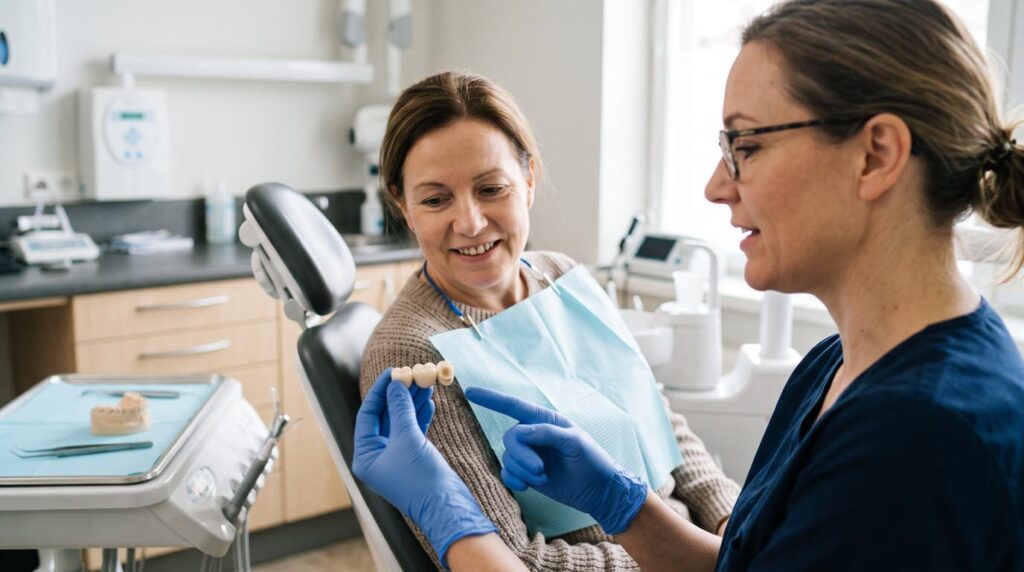
A dental bridge is a fixed restoration that replaces one or more missing teeth with artificial teeth supported by nearby natural teeth or dental implants. It helps restore chewing and speaking, fills gaps in your smile, and may prevent neighboring teeth from shifting. The four main types are traditional, cantilever, Maryland, and implant-supported bridges. At Vista Dorada Dental in Gilbert, AZ, patients can explore tooth replacement options based on their oral health, the location of missing teeth, and the condition of surrounding teeth. The right bridge depends on the available support, bite pressure, and treatment needs. Most traditional bridges require tooth preparation, impressions, and fitting over two or more appointments. Dental bridges commonly last 5 to 15 years, sometimes longer with proper care. Costs depend on the bridge type, materials, and insurance coverage. This guide explains the benefits, possible risks, procedure, daily cleaning, and how dental bridges compare with other tooth replacement options. What Is a Dental Bridge? A dental bridge is a custom-made restoration used to replace one or more missing teeth. It fills the empty space with artificial teeth supported by neighboring natural teeth or dental implants. The restoration is designed to match the shape, color, and position of surrounding teeth while helping restore normal oral function. Unlike removable dentures, fixed bridges stay in place during eating and speaking. According to the American Dental Association, a fixed dental bridge can only be removed by a dentist. What Are the Main Parts of a Dental Bridge? A dental bridge has several components that work together to replace missing teeth: Pontics: Artificial teeth that fill the spaces left by missing natural teeth. Abutments: Natural teeth or dental implants that provide support for the bridge. Retainers: Crowns or bonded attachments that secure the restoration to its supports. Connectors: Parts that join the replacement teeth to the supporting structures. Not every bridge uses the same components. Traditional bridges rely on crowns, while Maryland bridges use bonded wings and implant-supported bridges attached to dental implants. How Do Dental Bridges Work? Dental bridges work by using nearby teeth or dental implants to support artificial replacement teeth. When you bite or chew, pressure passes through the bridge to these supporting structures. A properly fitted bridge helps restore chewing function while keeping the replacement teeth stable. The dentist considers the strength of the supporting teeth, the location of the gap, and how your upper and lower teeth meet. These factors influence the bridge’s design and long-term stability. How Does Your Bite Affect Dental Bridge Stability? Your bite affects how pressure is distributed across a dental bridge. Uneven contact, teeth grinding, or clenching can increase stress on the restoration and supporting structures. Excessive pressure may contribute to wear, chipping, or loosening over time. A 2023 study by Alois Schmid and colleagues used computer modeling to examine how uneven biting contacts affect an all-ceramic dental bridge. The researchers found increased stress near certain contact points, highlighting the importance of proper bite adjustment. Dentists check how the replacement teeth meet the opposing teeth before completing treatment. Patients who grind their teeth may also need additional protection, such as a custom nightguard. What Are the Four Main Types of Dental Bridges? The four main types of dental bridges are traditional, cantilever, Maryland, and implant-supported bridges. Each uses a different method to support replacement teeth. The most suitable design depends on the number of missing teeth, the condition of neighboring teeth, and where the gap is located. Some designs preserve more natural tooth structure, while others require implants or prepared supporting teeth. Traditional Dental Bridges A traditional dental bridge uses crowns on natural teeth on both sides of the missing space. The crowns support the artificial tooth between them. This design commonly replaces one or more missing teeth when suitable supports are present. The dentist must permanently reshape the supporting teeth to make room for the crowns. Cantilever Dental Bridges A cantilever bridge uses support from only one side of the gap. It may be considered when a suitable supporting tooth is available on one side but not the other. Because the replacement tooth extends beyond its support, chewing forces require careful evaluation. This design is not suitable for every tooth location. Maryland Dental Bridges A Maryland bridge, also called a resin-bonded bridge, uses a metal or ceramic framework bonded to neighboring teeth. Its wings usually attach to the backs of those teeth. It is commonly considered for replacing a front tooth because it often requires little removal of natural enamel. However, the bonded attachment may loosen under unsuitable biting conditions. The success of a Maryland bridge also depends on the condition of the supporting teeth and the available enamel for bonding. Large fillings, existing crowns, and unsuitable biting contacts may affect its stability. A 2023 clinical paper by King, Sood, and Ashley discusses how case selection, tooth position, and restoration design influence the success of resin-bonded bridges. Implant-Supported Dental Bridges An implant-supported bridge attaches to dental implants placed in the jawbone instead of depending on neighboring natural teeth. This design can replace several missing teeth without preparing healthy adjacent teeth for crowns. Implant placement requires surgery and healing before the final restoration can be attached. The available bone and overall oral health influence suitability. How Do the Different Dental Bridge Types Compare? Dental bridge types differ mainly in how they attach, how much tooth preparation they require, and where they can be used. Traditional and cantilever bridges depend on natural tooth support, while Maryland bridges use adhesive bonding. Implant-supported bridges require a surgical foundation. The following comparison shows the main differences to discuss during treatment planning. Bridge Type Support Method Tooth Preparation Typical Use Key Consideration Traditional Crowns on teeth on both sides Supporting teeth reshaped One or more missing teeth Needs strong supporting teeth Cantilever Support from one side May require crown preparation Selected single-tooth gaps Greater leverage on support Maryland Bonded metal or ceramic wing Little or none in many cases Usually a missing front tooth Needs
Is Fluoride Treatment Safe for Children’s Teeth?

Yes, fluoride treatment is safe for children’s teeth when used in recommended amounts. Professional fluoride varnish helps strengthen enamel, prevent cavities, and slow early tooth decay. It is also considered safe for toddlers when applied correctly. However, swallowing too much fluoride over time during tooth development can cause dental fluorosis, so proper use matters. Parents should understand how fluoride treatment for children differs from daily toothpaste use. At Vista Dorada Dental in Gilbert, AZ, families can discuss their child’s cavity risk, fluoride exposure, and appropriate preventive care. This guide explains the benefits, possible risks, age-based recommendations, and what parents should expect during and after a professional fluoride application. What Is Fluoride and Why Is It Important for Children? Fluoride is a natural mineral that has been used in dentistry for decades. It makes teeth stronger and more resistant to the acid that causes cavities. It also helps with remuneration meaning it can repair early decay before it turns into a real cavity. Children need this protection more than adults because their enamel is thinner and softer, making young teeth easier targets for decay. Cavities in baby teeth can cause pain, trouble eating, and even damage to the permanent teeth growing underneath. How Fluoride Works in Children’s Teeth Every time your child eats something sugary, bacteria in the mouth release acid that slowly eats away at the enamel. Over time, this leads to cavities. Fluoride works like a shield. It strengthens enamel by attracting calcium and phosphate to rebuild what acid breaks down. If early damage has already started, fluoride can even reverse it before a real cavity forms. This is why fluoride is not just about preventing cavities. It is about keeping your child’s teeth strong through years of eating and growing. Is Fluoride Treatment Safe for Children’s Teeth? Yes, professional fluoride treatment is generally safe for children when applied correctly. Dentists use a small, measured amount of fluoride varnish that stays in contact with the teeth while limiting how much is swallowed. It can be used for young children, including toddlers, after their first teeth appear. The American Dental Association’s clinical guidelines recommend 2.26% fluoride varnish for children younger than six who are at risk of cavities. Other professional fluoride products may be appropriate for older children. The dentist considers age, cavity risk, and existing fluoride exposure before recommending treatment. Types of Fluoride Treatments for Children There are several types of fluoride treatments available for children, each designed to strengthen teeth, prevent cavities, and support healthy oral development. Fluoride Toothpaste Fluoride toothpaste is the most common form of fluoride for children, used twice a day during regular brushing. Pediatrics’s dentists recommend fluoride toothpaste in small amounts from the first tooth onward. For children under 3, use only a tiny smear, about the size of a grain of rice. From ages 3 to 6, a pea-sized amount is the right quantity. Fluoride Varnish Fluoride varnish is the treatment most commonly applied at dental offices. Your dentist will paint a thin layer of fluoride varnish on your child’s teeth. Fluoride varnish is a sticky yellow or orange substance that often has a pleasant taste. Varnish is much stronger than toothpaste because it delivers a higher concentration of fluoride directly to the tooth surface. The varnish becomes firm when it contacts saliva and stays on the teeth, helping limit the amount of fluoride your child may swallow. Fluoride Mouth Rinses Fluoride mouth rinses provide an additional layer of protection for older children. They are not recommended for children under 6 because younger children have not yet developed the ability to reliably spit rather than swallow. For children 6 and older who are at higher risk for cavities, a dentist may recommend a fluoride rinse as part of the daily oral care routine. Benefits of Fluoride Treatment in Children Fluoride treatment helps prevent cavities, strengthens tooth enamel, and slows early tooth decay. It protects both baby teeth and permanent teeth by helping enamel resist acids produced by bacteria. Fluoride can also support remineralization before early enamel damage becomes a permanent cavity. A Cochrane systematic review of fluoride varnishes examined clinical trials involving children and adolescents and found that fluoride varnish reduces tooth decay. Preventing cavities may reduce the need for fillings and other dental procedures. However, professional applications work best alongside regular brushing, healthy eating habits, and routine dental care. Are There Any Risks or Side Effects? Fluoride treatment is generally well tolerated, but excessive fluoride intake can cause problems. Dental fluorosis develops when children consume too much fluoride while their permanent teeth are forming. Mild cases appear as faint white lines or spots, while more severe cases can cause noticeable enamel changes. The American Academy of Pediatric Dentistry’s fluoride therapy guidance emphasizes using fluoride according to a child’s age, cavity risk, and overall exposure. Professional varnish limits the amount swallowed, although temporary tooth discoloration or rare reactions to varnish ingredients may occur. Parents should tell the dentist about known allergies and any fluoride supplements their child uses. Recommended Fluoride Use by Age The amount of fluoride children need depends on their age, as younger children require smaller amounts to safely protect their developing teeth. Babies and Toddlers As soon as your baby’s first tooth appears, it is time to start brushing. Use a soft infant toothbrush and a tiny smear of fluoride toothpaste, no bigger than a grain of rice. This gives the tooth some protection without any risk of too much fluoride. When the first tooth comes in, parents should help brush with a rice grain-size smear of fluoride toothpaste and make an appointment with a dentist. Children (3 to 6 Years) At age 3, increase the toothpaste amount to pea-sized. Children this age are learning to brush but still cannot be trusted to spit consistently, so a parent should always be present during brushing. Fluoride varnish treatments at the dentist are also recommended during this period, typically every three to six months depending on cavity risk. Older Children (6
Porcelain Veneers Before and After: What to Expect From Your Smile Transformation
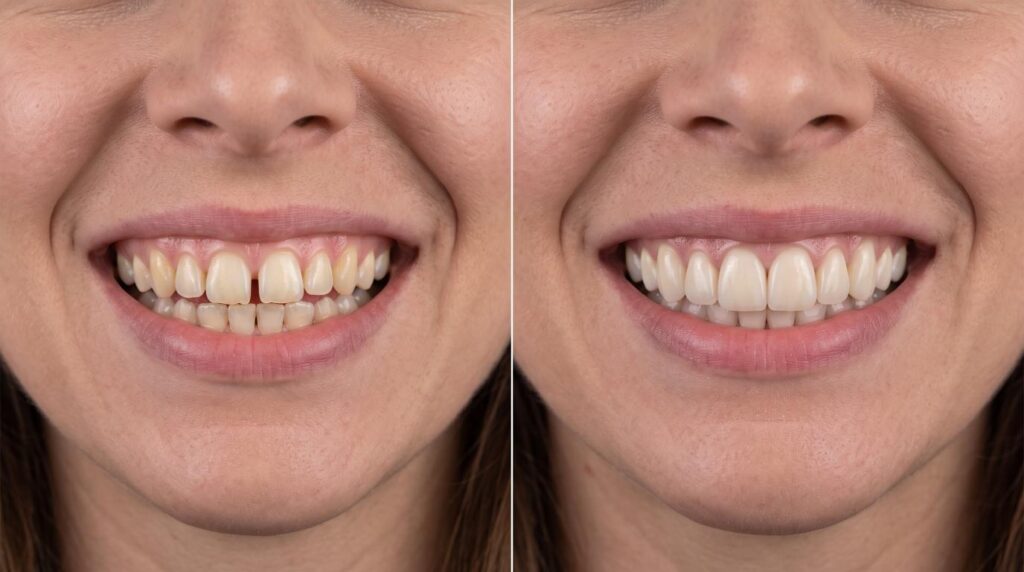
Porcelain veneers before and after results can show clear changes in tooth color, shape, size, spacing, and the overall balance of a smile. Veneers are thin pieces of porcelain placed over the front surfaces of selected teeth to change how those teeth look. At Vista Dorada Dental in Gilbert, AZ, veneer treatment is planned around the condition of your teeth and the changes you want to make. The final result can be different for every person because no two starting smiles are exactly alike. Veneers can improve many cosmetic concerns, but they cannot correct every dental problem. Healthy teeth and gums, careful planning, and realistic expectations are important before treatment begins. Porcelain Veneers Before and After: What Changes? The biggest difference seen in veneer before-and-after photos is usually not one single change. Several small improvements may work together to make the smile appear more even. Veneers can change the visible color, width, length, and shape of selected teeth. They may also help close small spaces or make worn edges appear more even. Research into cosmetic improvement with veneers found that factors such as tooth shape, color, tooth display, gum level, and gum symmetry can all influence how patients view their final smile. What Porcelain Veneers Can Improve Porcelain veneers may be considered for teeth that are: Deeply discolored or difficult to whiten Chipped along the edges Worn or shortened Slightly uneven in size Misshapen Separated by small gaps Different in appearance from nearby teeth Veneers can also be placed on several visible teeth when the goal is to create a more balanced appearance across the smile. The exact change depends on how the teeth look before treatment. Someone with one chipped tooth has very different needs from someone who wants several front teeth changed together. What Porcelain Veneers Cannot Fix Veneers improve the visible surface of a tooth, but they do not solve every oral health problem. They are not designed to treat active tooth decay or gum disease. Teeth with major structural damage may need another type of restoration. Significant bite or alignment problems may also require orthodontic or restorative treatment instead. For this reason, the appearance of the smile should not be the only part of the evaluation. The dentist also needs to look at the condition of the teeth, gums, and bite before recommending treatment. Real Porcelain Veneers Before and After Examples Porcelain veneers before and after photos can show changes in tooth color, shape, size, spacing, and overall smile balance. For example, veneers may help cover deep discoloration, improve the look of chipped or worn teeth, close small gaps, or make uneven teeth appear more consistent. When several veneers are placed together, they can also create a more balanced look across the visible teeth. Before-and-after photos should be used as examples, not as a guarantee of your own results. Look at the condition of the teeth before treatment, how many veneers were placed, and whether other treatments were also completed. Every smile starts differently, so the final result depends on your teeth, gums, smile design, and treatment plan. What Makes Porcelain Veneers Look Natural? Natural-looking veneers are not simply very white teeth. Color, shape, surface details, tooth length, gum position, and the way the veneers fit with nearby teeth all affect the final appearance. Choosing the Right Tooth Color The right veneer color depends on the person’s smile and treatment goals. Some people want a noticeably brighter smile. Others want the veneers to blend with untreated natural teeth. Porcelain can also interact with light in ways that influence its final appearance. This is one reason material selection and shade planning are important rather than choosing color based only on a shade chart. Matching Tooth Shape to Your Smile Tooth shape can have a strong effect on the final result. Front teeth should work together rather than looking like separate pieces. The dentist may consider their width, length, edges, position, and relationship with the lips. Research comparing patient satisfaction after porcelain and composite veneers found that shape, color, size, smile line, tooth display, and surrounding gum appearance can all play a part in cosmetic improvement. Creating Proportion Across the Smile A veneer may look attractive by itself but still appear out of place if its size does not match the neighboring teeth. This becomes especially important when a small gap is being closed or several veneers are being used together. Treatment planning should look at the entire visible smile instead of designing each tooth in isolation. Planning the Veneers Before They Are Made Good planning gives the dentist and patient a chance to discuss the expected result before the final restorations are completed. Photos, scans, impressions, models, or temporary designs may be used depending on the case. The goal is to make decisions about tooth length, shape, position, and shade before the final veneers are bonded. What Happens Before Your Veneers Before and After Results? The final photograph may make veneer treatment look like a simple switch from one smile to another. In reality, several planning steps happen first. Smile Evaluation and Treatment Planning The dentist first examines the teeth, gums, bite, and cosmetic concerns. This step helps determine whether veneers are appropriate and whether another condition needs to be treated first. Discussing Your Desired Smile Patients may have very different ideas about the result they want. Some want a brighter smile. Others are more concerned about chips, uneven tooth lengths, spaces, or tooth shape. Photos of smiles you like may help explain your preferences, but the design still needs to work with your own teeth and face. Preparing the Teeth Some porcelain veneer treatments require removal of a small amount of tooth structure so the restoration can fit properly. The amount of preparation varies by case. Certain carefully selected patients may be candidates for little or no preparation. A clinical study following a specific no-prep porcelain veneer protocol reported good performance over 36 to 60 months, while also stressing the importance of proper patient selection.
Does Delta Dental Cover Implants? What You Need to Know

Does Delta Dental cover implants? It can, but coverage depends on your specific dental plan. Some Delta Dental plans include dental implants as a major service, while other plans may limit or exclude them. Your plan may also treat the implant, crown, bone graft, and other parts of treatment differently. If you are considering dental implants in Gilbert, AZ, Vista Dorada Dental can help you understand the treatment you may need and the costs involved. Before starting treatment, it is important to review your Delta Dental benefits and find out what your individual plan may pay. Having Delta Dental insurance does not automatically mean the full cost of an implant will be covered. Your deductible, annual maximum, waiting period, coinsurance, network status, and plan exclusions can all affect how much you pay. How Delta Dental Coverage for Implants Works Delta Dental offers many different dental plans. The benefits under one plan may be very different from another. This is why two people with Delta Dental may receive different coverage for the same type of dental implant treatment. Delta Dental states that many of its plans cover part of the cost of implants, but implants are not covered by every plan. Delta Dental of Arizona also lists implants as covered major services under some individual plans while other available plans exclude them. What Part of Dental Implant Treatment Does Delta Dental Cover? A dental implant is not always billed as one single treatment. Replacing a missing tooth may involve several procedures that happen at different stages. Your insurance plan may review each service separately. One part may qualify for a benefit while another may have different coverage rules. Dental Implant Placement The dental implant is the small post placed into the jawbone. It acts as a foundation for the replacement tooth. Some Delta Dental plans include implant placement under major services. The percentage paid depends on your specific benefits, and coverage can still be affected by the deductible, annual maximum, waiting period, and other plan terms. Implant Crown The crown is the visible replacement tooth placed above the dental implant. The implant post and implant crown are different parts of treatment. A plan that provides some implant benefits may still calculate coverage for the crown separately. This is one reason patients should ask for an estimate that includes every planned procedure rather than asking only whether “implants” are covered. Bone Grafting Some people do not have enough healthy jawbone to support an implant. In these cases, a dentist may recommend bone grafting before implant placement. Delta Dental also explains that bone grafting may be needed when there is not enough healthy jawbone to support an implant. Insurance coverage for a bone graft depends on the plan and the reason the procedure is needed. It should be checked separately from the implant benefit. What Factors Affect Delta Dental Implant Coverage? Several parts of your dental plan can change how much Delta Dental may pay. Understanding these terms can make your estimated costs much easier to follow. Plan type: Delta Dental offers PPO and other plan types, with benefits selected by you or your employer. Even two PPO plans may have different annual maximums, percentages, waiting periods, or exclusions; the plan name alone doesn’t confirm your implant coverage. Annual maximum: the most your plan will pay toward covered dental services during a benefit year. For example, if your plan has a $1,500 annual maximum and you’ve already used part of it on other treatments, less may remain for an implant. Deductible & coinsurance: a deductible is what you pay before your plan begins covering certain services; coinsurance is the percentage split between you and the plan after that. If a plan pays 50% for a covered major service, that isn’t necessarily 50% of the dentist’s full treatment fee; it’s typically based on the plan’s allowed amount. Waiting periods: some plans require a period of enrollment before certain benefits, including implants, become available. How Much Does Delta Dental Pay for Implants? There is no single amount that Delta Dental pays for every dental implant. The payment depends on your exact plan, the services performed, the plan’s allowed amount, your deductible, your coinsurance, your remaining annual maximum, and other benefit rules. What You May Have to Pay Out of Pocket Your personal cost may include the deductible, your coinsurance, services excluded from coverage, costs above the plan’s benefit allowance, and treatment remaining after your annual maximum has been reached. You may also have costs for related services, such as grafting or restorative work, if those procedures receive different benefits. A Simple Dental Implant Cost Example The following example uses general ranges only. It is meant to show how insurance factors may affect your costs and should not be treated as a Delta Dental quote or guaranteed benefit. Example Item Hypothetical Range Total proposed treatment cost Several thousand dollars Insurance allowed amount May be lower than the total treatment cost Deductible Varies by plan Plan share May cover a percentage of eligible services Remaining annual maximum Depends on benefits already used Estimated insurance payment Limited by plan benefits and annual maximum Patient responsibility Varies based on coverage and treatment needs Even when a plan covers a percentage of implant treatment, that does not mean the same percentage will be paid toward the full dental bill. Deductibles, annual maximums, allowed amounts, exclusions, and other plan rules can change the final amount. Ask for a pre-treatment estimate for a clearer idea of your expected costs. Does Delta Dental PPO Cover Implants? Some Delta Dental PPO plans cover part of the cost of dental implants, but PPO membership by itself does not guarantee implant benefits. Your exact PPO plan may include implants, exclude them, or place them within a major-service category that has its own percentage and limitations. Delta Dental recommends reviewing your individual benefits to see what your plan provides. In-Network vs. Out-of-Network Implant Costs A Delta Dental network includes dentists who participate under agreed plan rules
Are Teeth Whitening Strips Safe? Benefits, Risks, Side Effects & Expert Tips

Teeth whitening strips are generally safe for most adults with healthy teeth and gums when used exactly as directed. Most contain peroxide-based whitening agents that break down stains on natural teeth. The most common side effects are temporary tooth sensitivity and gum irritation, especially when strips are overused or the whitening gel touches the gums. If you are considering whitening strips in Gilbert, AZ, Vista Dorada Dental can help determine whether at-home whitening is appropriate for your teeth. People with cavities, gum disease, significant sensitivity, worn enamel, or existing dental restorations may need a different approach. Schedule a consultation if you are unsure which whitening option is safest for your smile. Whitening strips tend to work best on natural teeth with common yellow or surface staining, but they will not change the color of crowns, veneers, or fillings. In this guide, you will learn whether whitening strips can affect enamel, how often to use them, how to reduce sensitivity, which mistakes to avoid, and when professional whitening may be a better choice. What Are Teeth Whitening Strips? Teeth whitening strips are thin, flexible plastic strips coated with a whitening gel that helps remove stains from the surface of your teeth. They are designed to fit over the front of your teeth and are worn for a specific amount of time, allowing the whitening ingredients to work directly on the enamel. Most whitening strips contain peroxide-based ingredients that gradually break down stains caused by coffee, tea, wine, smoking, and other everyday habits. Because they are easy to use, affordable, and available over the counter, whitening strips have become one of the most popular at-home teeth whitening options for people looking to achieve a brighter smile. Myths vs. Facts About Teeth Whitening Strips Many misconceptions about teeth whitening strips can make it difficult to know what is true. The table below separates common myths from the facts so you can use whitening strips safely and with realistic expectations. Myth Fact Whitening strips ruin your enamel. When used as directed, whitening strips do not damage healthy tooth enamel. Using more whitening strips will whiten your teeth faster. Overusing whitening strips can increase tooth sensitivity without improving your results. Whitening strips work on all types of stains. They work best on surface (extrinsic) stains and are less effective on deep intrinsic stains. Whitening strips can whiten crowns, veneers, and fillings. Whitening strips do not change the color of dental restorations such as crowns, veneers, or fillings. Tooth sensitivity caused by whitening strips is permanent. Any sensitivity is usually mild and temporary, and it often goes away after treatment ends. Everyone can safely use whitening strips. People with cavities, gum disease, worn enamel, or severe sensitivity should consult a dentist before whitening. Benefits of Using Teeth Whitening Strips Whitening strips remain popular for good reason. Here are some of their key benefits: Affordable compared to professional whitening: Whitening strips cost much less than in-office treatments, making them a budget-friendly option for achieving a brighter smile. Easy to use at home: No dental appointment is required. Simply apply the strips as directed while relaxing, working, or doing other daily activities. Noticeable whitening results: With consistent use, many people see visible improvements in the color of their teeth within one to two weeks. Convenient treatment schedule: Most whitening strips only need to be worn for about 20 to 30 minutes a day, making them easy to fit into a busy routine. Possible Risks and Side Effects Whitening strips are low risk, but they are not completely risk free. Knowing what to watch for helps you use them safely. Tooth sensitivity Tooth sensitivity is the most common side effect of whitening strips. The peroxide in the whitening gel can temporarily pass through the enamel and affect the nerves inside the teeth. This may make your teeth more sensitive to hot, cold, or sweet foods and drinks. In most cases, the sensitivity is temporary and improves after stopping the treatment. Gum irritation Whitening strips can cause gum irritation if they do not fit properly or if the whitening gel touches the gum tissue. Some people may experience redness, burning, or a mild stinging sensation around the gums. Using strips that fit well and following the recommended application time can help reduce this risk. Enamel damage from overuse Using whitening strips more often or longer than recommended can increase tooth sensitivity and may irritate your teeth and gums. Always follow the product instructions and avoid excessive whitening. If you are concerned about enamel health, learn more about whether teeth whitening can damage enamel. Uneven whitening Whitening strips may not produce the same results on every tooth. Teeth that are crowded, uneven, or harder to reach may not whiten as effectively as others. This can sometimes create a patchy or uneven appearance after treatment. Existing dental work won’t whiten Whitening strips only work on natural tooth enamel. Dental restorations such as crowns, veneers, bridges, and fillings do not respond to whitening treatments. As your natural teeth become lighter, these restorations may appear a different shade, creating an uneven smile color. Who Can Safely Use Teeth Whitening Strips? Teeth whitening strips are generally a good option for adults with healthy teeth and gums who want to reduce common surface stains. They tend to work best on natural teeth with yellow or mild discoloration caused by coffee, tea, red wine, smoking, and other everyday staining habits. You should speak with a dentist before using whitening strips if you have cavities, gum disease, worn enamel, severe tooth sensitivity, or unusual discoloration. Whitening strips also do not change the color of crowns, veneers, bridges, or fillings, so people with visible dental restorations may need another whitening approach for more even results. How to Use Teeth Whitening Strips Safely Teeth whitening strips are generally safe when you follow the product instructions carefully. Apply the strips only for the recommended amount of time, avoid using them more often than directed, and make sure the whitening gel
Is Invisalign Better Than Braces? A Complete Comparison
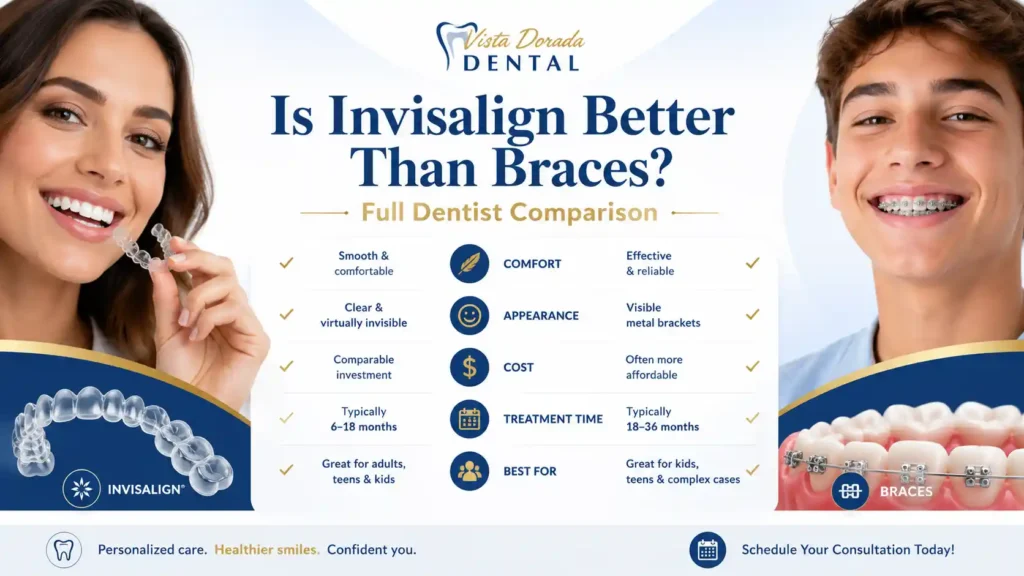
Invisalign is often better for people who want discreet, removable treatment and easier oral hygiene. Braces may be the better choice for severe crowding, complex bite problems, or patients who may not wear aligners consistently. Both treatments can straighten teeth and correct many bite issues. Invisalign usually offers fewer food restrictions and less irritation from brackets or wires. Braces work continuously and may provide more precise control over difficult tooth movements. Neither option is always faster, cheaper, or more effective for every patient. At Vista Dorada Dental in Gilbert, AZ, patients can receive a personalized evaluation to determine which treatment best fits their teeth, bite, age, and daily routine. This guide compares results, treatment time, comfort, cost, hygiene, and suitability for adults, teens, and children so you can make a more informed choice for your smile. Is Invisalign Better Than Braces? The Quick Answer Invisalign may be better than braces if you have a suitable orthodontic problem and can wear your aligners as directed. Braces may be better when your case requires more complex or highly controlled tooth movement. Invisalign offers several lifestyle advantages. The aligners are less noticeable, removable for meals, and easier to work around when brushing and flossing. Braces have their own advantages. They remain attached to the teeth, so you do not need to remember to wear them. They can also provide precise control during complicated bite corrections. Research suggests that clear aligners and fixed braces can both treat many simple orthodontic cases successfully. However, the quality of available evidence varies. Some movements and complex cases may still be treated more predictably with fixed braces. (PubMed) Therefore, Invisalign is not automatically better just because it is newer or less visible. The best treatment is the one that can safely correct your specific bite while matching your ability to follow the plan. Invisalign vs. Braces: Key Differences at a Glance Factor Invisalign Traditional Braces Appearance Clear and less noticeable Metal brackets and wires are visible Removability Removed for eating and cleaning Fixed to the teeth Effectiveness Suitable for many mild, moderate, and selected complex cases Suitable for mild through highly complex cases Responsibility Requires consistent daily wear Works without removal Food restrictions Few restrictions after trays are removed Hard, sticky, and chewy foods may need to be avoided Oral hygiene Teeth are easier to brush and floss Cleaning around brackets takes more effort Comfort Smooth trays but pressure and attachment irritation may occur Pressure, brackets, and wires may cause soreness Repairs Aligners can be lost, damaged, or stop fitting Brackets and wires can loosen or break Visibility Attachments and elastics may still be noticeable Ceramic braces may be less visible than metal braces Retainers Required after treatment Required after treatment The table gives a general comparison. Your orthodontist may recommend additional attachments, elastics, expanders, or other appliances with either treatment. Is Invisalign Better Than Braces for Different Age Groups? Age alone does not decide the best appliance. Tooth development, jaw growth, treatment complexity, maturity, and daily habits all matter. Is Invisalign Better Than Braces for Adults? Invisalign can be a strong option for adults who want discreet treatment and can manage the daily routine. Adults often appreciate removing aligners for meals, photographs, presentations, and important events. Normal brushing and flossing access can also be helpful for patients with extensive dental work or gum concerns. However, adults may have crowns, bridges, implants, missing teeth, bone loss, or previous gum disease. These factors require careful planning. Healthy teeth can be moved at different ages, but adult treatment must reflect the patient’s complete dental history. Braces may be more suitable when the case requires extensive bite correction or when wearing aligners for most of the day would be unrealistic. Is Invisalign Better Than Braces for Teens? Invisalign may suit responsible teens who care about appearance, play instruments, or want fewer food restrictions. The main concern is compliance. Aligners need to be worn consistently and returned to the mouth after meals, snacks, and sports. A teen who regularly loses retainers, forgets instructions, or removes the trays for long periods may achieve a more reliable result with braces. Braces can be easier for parents to monitor because the appliance remains attached. However, the teen must still clean carefully, avoid damaging foods, attend appointments, and wear any prescribed elastics. Is Invisalign Better Than Braces for Kids? Invisalign is not automatically better for younger children. Some children can use clear aligners, but their teeth and jaws are still developing. Removable trays also require maturity. A child must keep track of the aligners, wear them for the required time, and maintain proper cleaning. Braces or other fixed appliances may be preferred when growth guidance, expansion, severe crowding, or predictable compliance is important. Who Is a Good Candidate for Invisalign? A complete examination is needed before someone can be considered a suitable candidate. Patients With Mild to Moderate Alignment Problems Invisalign often works well for mild or moderate crowding, spacing, and selected bite problems. Some more complex cases can also be treated with aligners, especially when attachments, elastics, and other techniques are used. Suitability should be based on the required movements rather than a general label such as “mild” or “severe.” Patients Who Can Follow the Aligner Wearing Schedule Good candidates can wear the trays for the prescribed hours, remove them before meals, clean their teeth, and change aligners correctly. They must also be comfortable keeping track of the trays throughout work, school, travel, and social events. Cases That May Not Be Suitable for Invisalign Braces may be recommended when the treatment requires highly complex rotations, significant root movement, impacted tooth guidance, severe bite correction, or another appliance that works better with fixed treatment. Active cavities, untreated gum disease, and poor oral hygiene may also need attention before either form of orthodontic treatment begins. Who Is a Better Candidate for Braces? Braces are not an outdated fallback. They remain a highly versatile orthodontic treatment. Patients With Severe or Complex Orthodontic Problems Fixed braces may provide
Does Invisalign Work? Complete Guide to Effectiveness, Results, and What to Expect
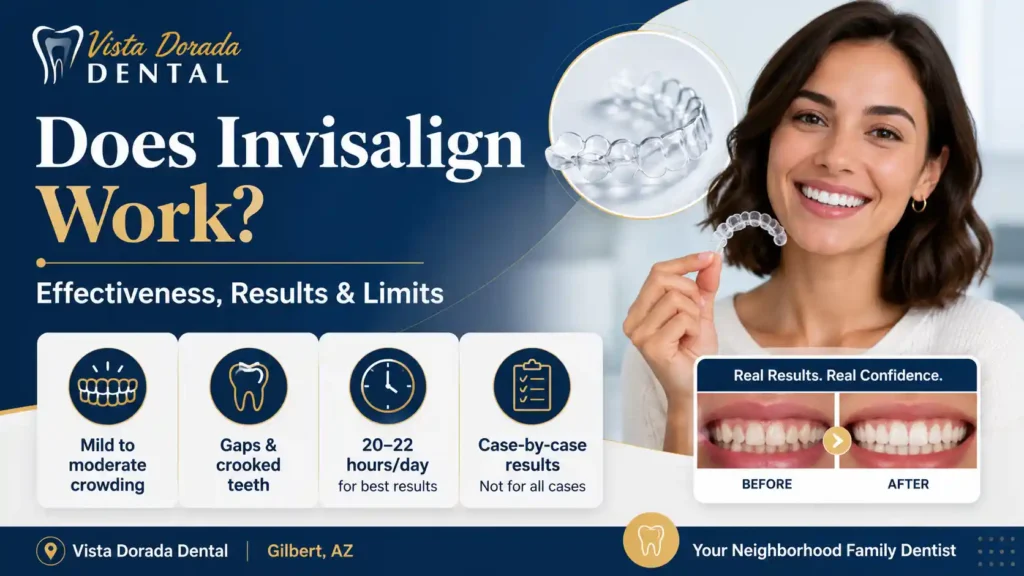
Yes, Invisalign does work for many people. It can help correct mild to moderate crowding, gaps, crooked teeth, and certain overbite, underbite, crossbite, and open-bite problems. The custom clear aligners apply controlled pressure to gradually move teeth into better positions. How effective Invisalign is depends on the complexity of the dental problem, the accuracy of the treatment plan, and how consistently the aligners are worn. Patients are typically instructed to wear them for 20 to 22 hours each day. Removing them too often, changing trays incorrectly, or missing appointments can delay progress and affect the final result. At Vista Dorada Dental in Gilbert, AZ, patients can receive a personalized evaluation to determine whether clear aligners are suitable for their teeth and bite. There is no single Invisalign success rate that applies to everyone, so this guide explains how Invisalign works, what it can correct, what affects its effectiveness, and how to determine whether it may work for you. Does Invisalign Work? Yes, Invisalign does work when it is used for a suitable orthodontic problem and worn as directed. Clear aligners can produce meaningful improvements in tooth alignment. However, their effectiveness is not the same for every movement or every patient. Research shows that clear aligner treatment can be effective for mild to moderate crowding. It also shows that some movements, including significant rotation, intrusion, and extrusion, can be less predictable. (PubMed) This does not mean Invisalign cannot perform difficult movements. Attachments, elastics, refinements, and other techniques can improve control. However, complex cases may require a longer plan or a different orthodontic approach. How Effective Is Invisalign? Invisalign can be highly effective for the right patient, but effectiveness must be judged according to the condition being treated. Straightening mildly crooked teeth is different from correcting a severe bite problem. A person with small gaps may have a simpler and more predictable plan than someone who needs several teeth rotated or moved vertically. In general, Invisalign tends to be more predictable for: Mild to moderate crowding Small or moderate spaces between teeth Mildly crooked or tilted teeth Relapse after previous orthodontic treatment Selected overbite, underbite, crossbite, and open-bite cases It may be less predictable when treatment requires: Large tooth rotations Significant vertical movement Major changes in tooth root position Severe crowding Complex bite correction Major jaw-position changes A systematic review found that clear aligners can resolve mild to moderate crowding, but the predictability of individual movements varies. Tipping movements were generally more predictable than rotation, intrusion, and extrusion. What Is Invisalign? Understanding Clear Aligner Treatment Invisalign is a clear aligner system used to straighten teeth without metal braces. Instead of wires and brackets, you wear a set of see-through plastic trays that fit over your teeth like a thin mouthguard. Each tray is custom made for your mouth. The biggest difference from traditional braces is how it looks and feels. Braces are fixed to your teeth and stay on the whole time. Invisalign aligners come out. Most people around you will not even notice you are wearing them. Invisalign came out in the late 1990s from a company now called Align Technology. Use computer planning to map tooth movement, then build a series of trays to do it step by step. Since then, more than 20 million people have used it. How Does Invisalign Work? Invisalign moves teeth through a biological process called bone remodeling. Your teeth are supported by bone and surrounding tissues. When an aligner applies controlled pressure, the bone and tissues around a tooth gradually adapt. This allows the tooth to move in the planned direction. Treatment usually follows several stages. Dental Examination and Consultation Your dentist first examines your teeth, gums, jaws, and bite. They may also take X-rays, photographs, or other diagnostic records. This examination helps determine whether Invisalign can safely and predictably address your concern. It may also reveal cavities, gum problems, or other conditions that should be treated before orthodontic care begins. Digital Scan and Treatment Plan A digital scanner creates a detailed model of your teeth. Your dentist uses this model to plan the direction and approximate amount of movement needed. The digital preview can help you understand the proposed outcome. However, it is a treatment simulation rather than a guaranteed picture of the final result. Teeth do not always move exactly as predicted. Custom Aligners A series of aligners is made according to the treatment plan. Each tray is shaped to apply pressure to selected teeth. You normally wear each set for the period prescribed by your dentist before moving to the next set. The schedule may vary based on your treatment plan and how well your teeth are tracking. Progress Appointments You will return for regular appointments so your dentist can check your progress. They will make sure the trays still fit and that the teeth are moving in the intended direction. When a tooth does not follow the plan, your provider may adjust the treatment or order additional aligners. Retainers After Treatment After the active aligner phase ends, you will need a retainer. Retainers help hold the teeth in their new positions while the surrounding bone and tissues stabilize. Long-term retainer wear is important because teeth can continue to shift throughout life. (American Association of Orthodontists) Does Invisalign Work? Yes, Invisalign does work when it is used for a suitable orthodontic problem and worn as directed. Clear aligners can produce meaningful improvements in tooth alignment. However, their effectiveness is not the same for every movement or every patient. Research shows that clear aligner treatment can be effective for mild to moderate crowding. It also shows that some movements, including significant rotation, intrusion, and extrusion, can be less predictable. This does not mean Invisalign cannot perform difficult movements. Attachments, elastics, refinements, and other techniques can improve control. However, complex cases may require a longer plan or a different orthodontic approach. How Effective Is Invisalign? Invisalign can be highly effective for the right patient, but effectiveness must be judged according to the